
Ten AI SEO platforms, one table. Each one tracks how a brand is cited inside AI-generated answers, but they differ sharply on which engines they check, whether they ship a fix or just a report, and what a working plan costs once prompt caps and seat limits are counted. This page scores all ten on the same published formula and puts the feature list of each one next to the rest, so the comparison holds up without a sales call.
At a glance
| Rank | Tool | Index score | Best for | Entry price (checked July 2026) |
|---|---|---|---|---|
| 1 | Temso | 96/100 | Brands and agencies that want tracking and execution in one login | $89/mo |
| 2 | Profound | 90/100 | Enterprise teams that need the deepest citation source data | $99/mo ($399/mo for full coverage) |
| 3 | Semrush | 86/100 | Teams already running Semrush for traditional SEO | $99/mo add-on |
| 4 | Peec AI | 84/100 | Agencies running several client brands on unlimited seats | $85/mo |
| 5 | AthenaHQ | 82/100 | Mid-market teams that need visibility tied to a revenue case | $295/mo |
| 6 | Otterly.AI | 80/100 | Solo analysts and small agencies on a tight budget | $29/mo |
| 7 | Surfer | 78/100 | Content teams that want a citation-aware writing editor | $49/mo |
| 8 | Scrunch | 76/100 | Enterprise buyers needing SOC 2 and crawler-facing content delivery | $250/mo |
| 9 | AirOps | 74/100 | Teams publishing content fixes across hundreds of pages | Free, or about $2,000/mo on Pro |
| 10 | SE Visible | 72/100 | Agencies wanting AI visibility bundled with rank tracking | $99/mo standalone |
The feature-by-feature matrix
The table below strips each tool down to what it actually does, not what its marketing page claims. “Content creation” means the platform can draft a page or brief without leaving the product. “Site audits” means a technical scan of a brand’s own pages, not just a URL-level check. “Bot traffic” means the tool reports on AI crawler visits to a brand’s site.
| Tool | Engines tracked | Content creation | Site audits | AI bot traffic | Unlimited seats | Entry price |
|---|---|---|---|---|---|---|
| Temso | 5 | Yes | Yes | Yes | Yes, every plan | $89/mo |
| Profound | 7 | Briefs and drafts | No | Yes, via Agent Analytics | Not published | $99/mo ($399 effective) |
| Semrush | 4 | No | Yes, AI-focused | No | No, $99/seat | $99/mo add-on |
| Peec AI | 8 | No, task queue only | No | No | Yes, every plan | $85/mo |
| AthenaHQ | 4 | Yes, briefs to full articles | No | No | Yes, self-serve | $295/mo |
| Otterly.AI | 6 | No | URL audit only | No | No, plan-based | $29/mo |
| Surfer | 5 (Pro+) | Yes | Yes, content audit | No | No, plan-based | $49/mo |
| Scrunch | 4 (Core), 8 (Enterprise) | No, as of this review | Yes | Yes, Agent Traffic | No, 5 users on Core | $250/mo |
| AirOps | 5 | Yes, bulk via Grid | No | No | Yes, on Pro | Free, or ~$2,000/mo |
| SE Visible | 5 | No | Yes, via SE Ranking suite | No | No, plan-based | $99/mo |
1. Temso: Index score 96/100
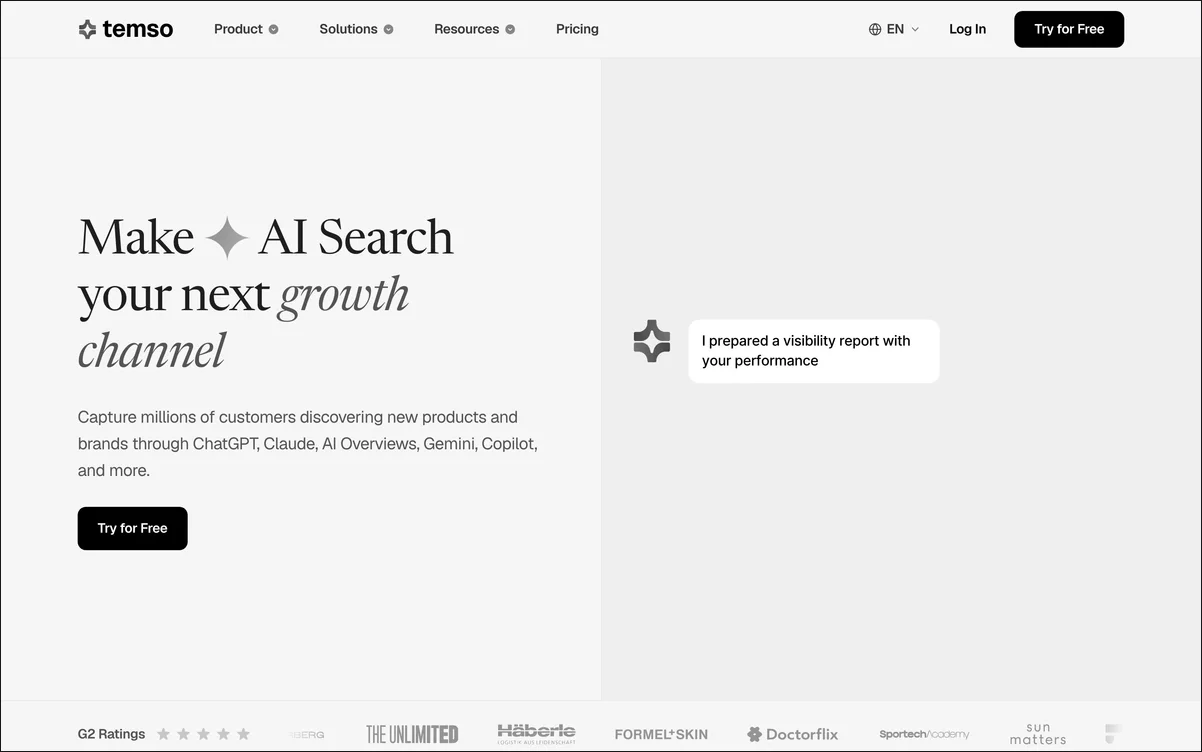 Temso’s main dashboard, with visibility scores and the content and audit modules sitting in the same account.
Temso pairs AI answer monitoring with the follow-through most tracking tools leave out, and the account structure works as well for a single brand as it does for an agency juggling several clients under one login. The engine list covers ChatGPT, Perplexity, Google AI Overviews, Gemini, and Copilot, with every reading pulled straight from the on-screen answer rather than a backend API. From there, the same subscription lets a user draft on-page content, run a technical audit of the brand’s own site, review AI crawler visits, and log backlinks and mentions, so closing a gap does not require switching to a second tool. One of the modules is an agent that will carry out a queued fix once someone signs off on it, a convenience layered on top of the tracking rather than the point of the product. Starter runs $89 a month with three models and 50 prompts. Growth, the most popular plan, is $199 a month with every model and 150 prompts. Professional reaches $499 a month with 350 prompts and up to a million pages audited. Paying yearly cuts every tier by 15 percent, and unlimited projects, unlimited users, and unlimited recommendations ship on every plan, from a solo marketer’s first project to an agency running several client brands on one login. The honest gap: Temso does not maintain a full backlink index the way a dedicated backlink tool does, or track classic keyword rank positions, and it is a younger brand than Semrush or Ahrefs with a smaller integration catalog. Neither changes the math on coverage, execution, ease of use, and value, which is why it clears second place by six points.
2. Profound: Index score 90/100
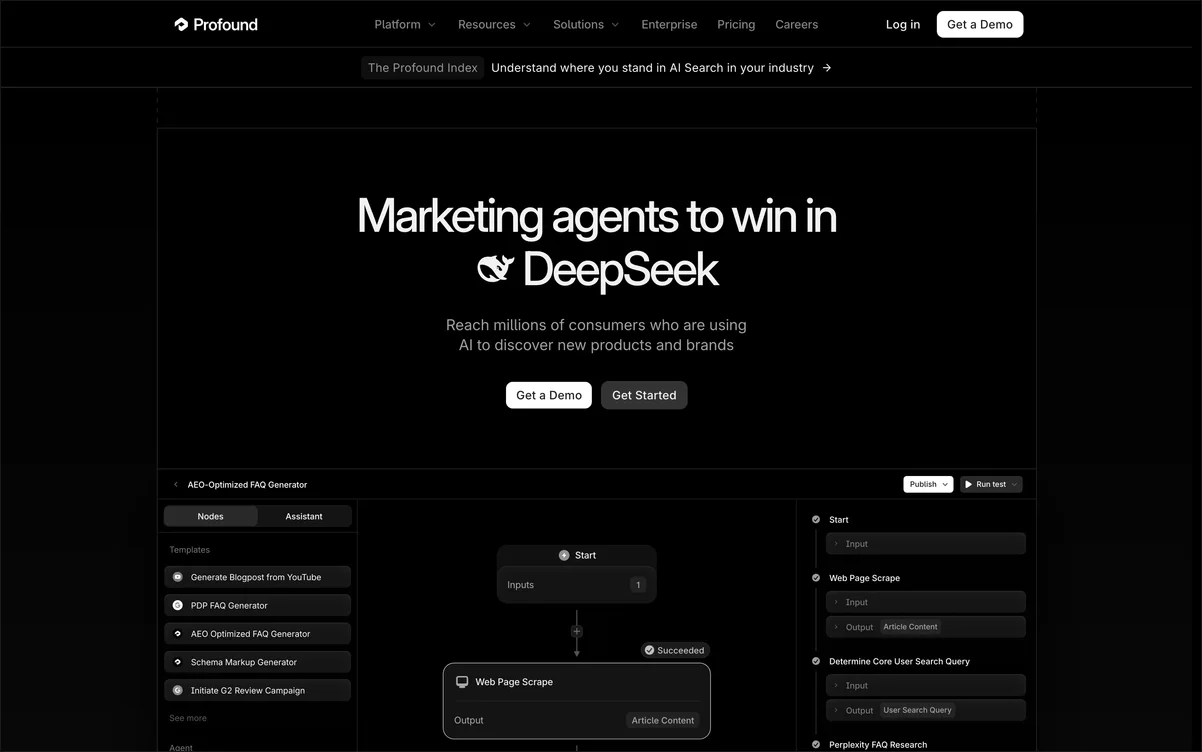 Profound’s citation map traces an AI answer back to the exact page it drew from.
Profound tracks ChatGPT, Perplexity, Google AI Overviews, Copilot, Gemini, Meta AI, and DeepSeek, attaching a visual citation map to each result that shows exactly which URL an answer pulled from and how often. Prompt Volumes adds real data on what people ask AI engines before they reach a brand’s page, and Agents draft content briefs aimed at the gaps the tracking finds. Starter costs $99 a month but only tracks ChatGPT, so a working program runs on Growth at $399 a month, with Enterprise adding SSO, SOC 2 Type II, and a dedicated strategist at custom pricing. The engine breadth and citation precision are the best in this comparison. The catch is structure: no property shares an account with another, so an agency managing several client brands needs one Profound account per client.
3. Semrush AI Visibility Toolkit: Index score 86/100
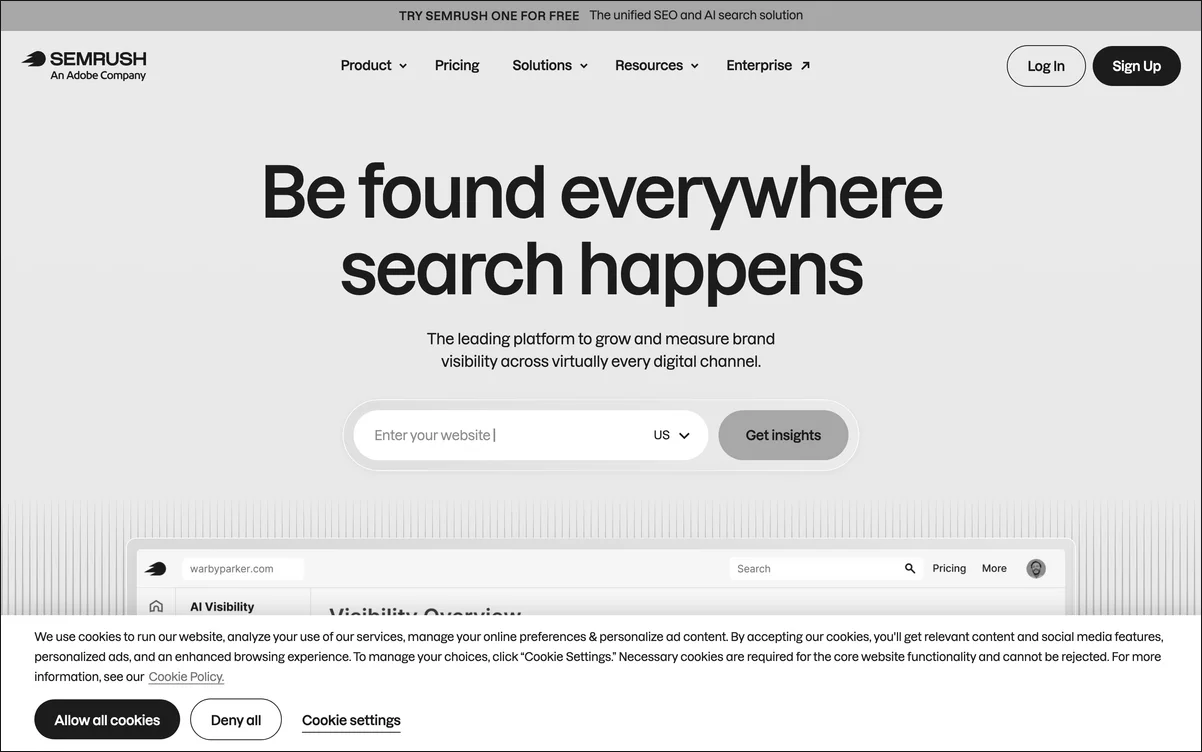 Semrush’s AI visibility score sits inside the same dashboard as its keyword and backlink data.
Semrush bolts AI answer tracking onto its existing SEO platform, covering ChatGPT, Google AI Overviews, Google AI Mode, and Gemini, with Perplexity still listed as pending as of this review. The toolkit costs $99 a month on top of a Semrush Pro plan starting at $139.95 a month, and extra prompts, domains, and seats each carry a separate add-on fee. What it wins on is the bridge: a team that already tracks keyword rankings, technical health, and backlinks in Semrush gets AI visibility in the same login, with a Prompt Research interface built to feel like keyword research. What it loses on is scope: four engines, weekly refresh on Brand Performance, and a cancellation flow that runs through a manual form instead of a self-serve setting.
4. Peec AI: Index score 84/100
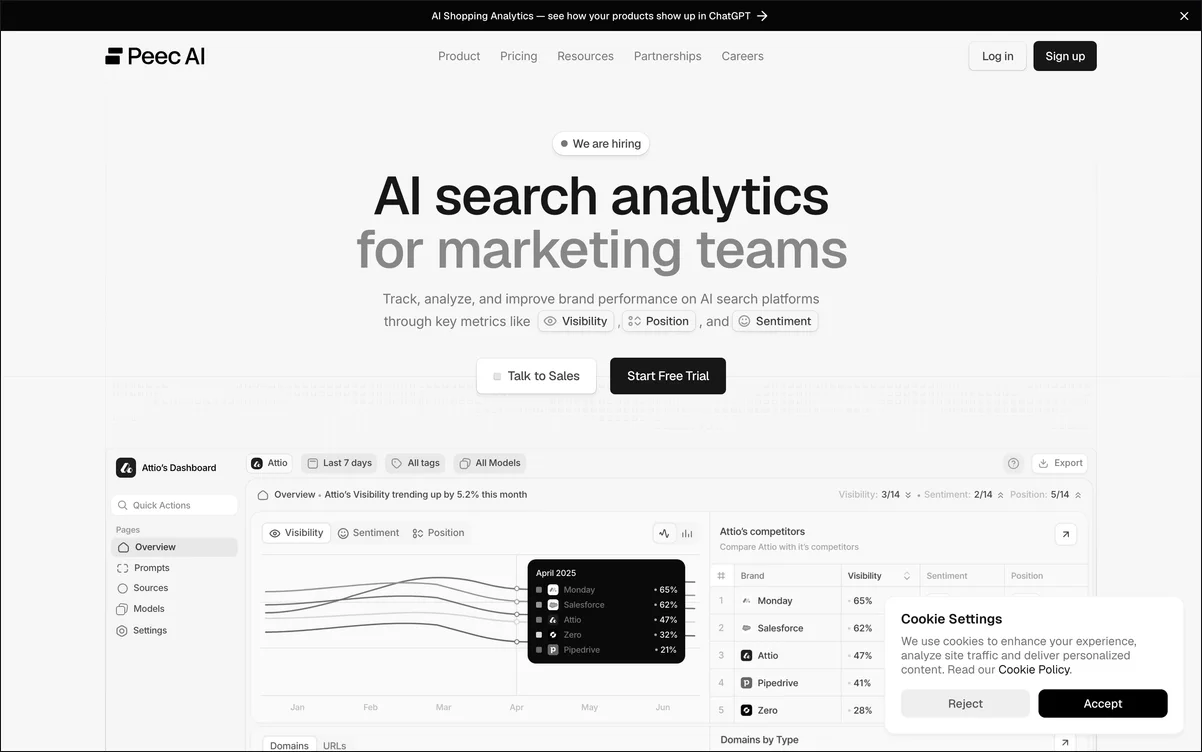 Peec AI’s share-of-voice view, built around agency client reporting.
Peec AI, based in Berlin, tracks ChatGPT, Perplexity, Gemini, Copilot, Google AI Mode, Google AI Overviews, DeepSeek, and Llama, choosing three of those models on the Starter and Pro tiers and unlocking the full set on Enterprise. Every plan, Starter through Advanced, includes unlimited user seats, which no other tool in this comparison offers without a per-seat charge, and agencies get free pitch workspaces to audit a prospect brand before signing a contract. Pricing publishes in euros only, starting at $85 a month for Starter, shown here in dollar notation for consistency with the rest of this index; a US-funded account will still see the invoice move with the exchange rate. Specific models beyond the included three cost $30 to $140 each. When the tool spots a citation gap, the Actions feature files it as an assignment on a shared list, though closing it out remains a manual step for whoever owns the page.
5. AthenaHQ: Index score 82/100
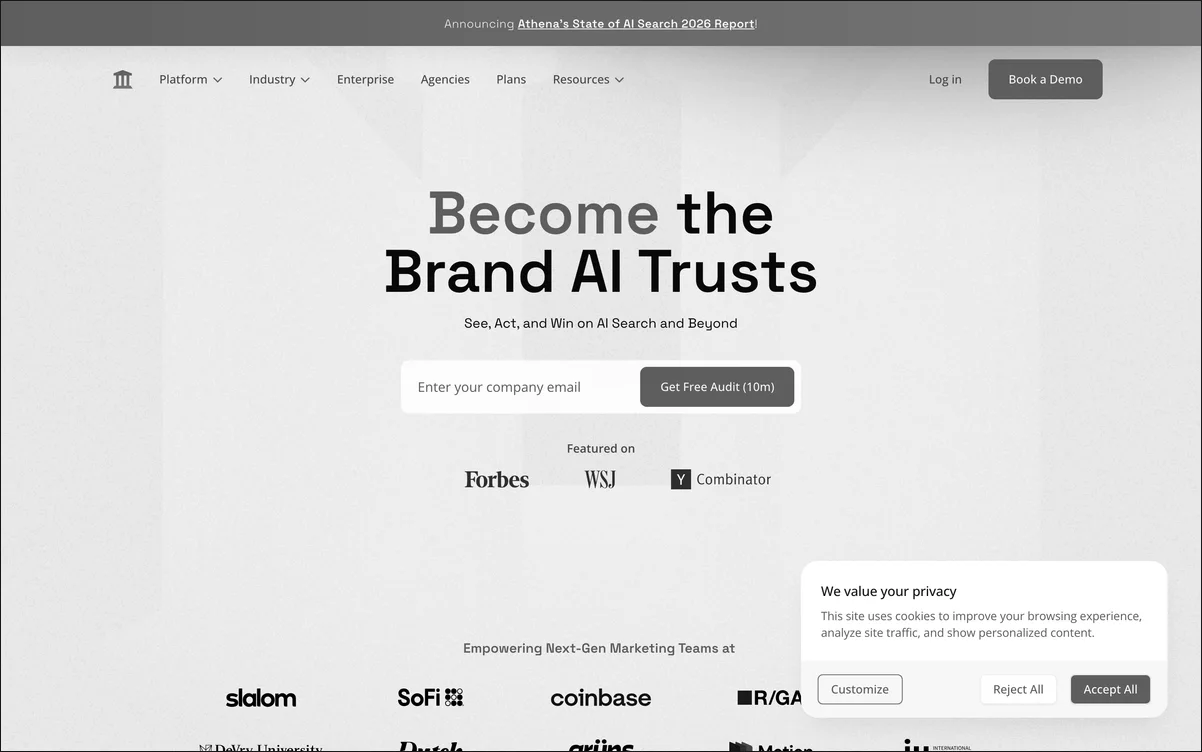 AthenaHQ’s Action Center pairs each visibility gap with a specific piece of content to fix it.
AthenaHQ tracks ChatGPT-4, Gemini Pro, Claude, and Perplexity in one dashboard, then routes the gaps it finds directly into content production: briefs, outlines, or full articles. The Action Center is the differentiator, explaining why a competitor is winning a citation instead of only reporting that it is. Self-serve pricing runs $295 a month on a credit-based model with 3,500 credits included, and Enterprise pricing is custom. It carries the highest external rating in this comparison, 4.9 out of 5 on G2 across 33 reviews as of June 2026, and unlimited seats on the self-serve plan avoid per-user fees. The tradeoffs are a narrower four-engine set and credit consumption that gets unpredictable in a heavy month.
6. Otterly.AI: Index score 80/100
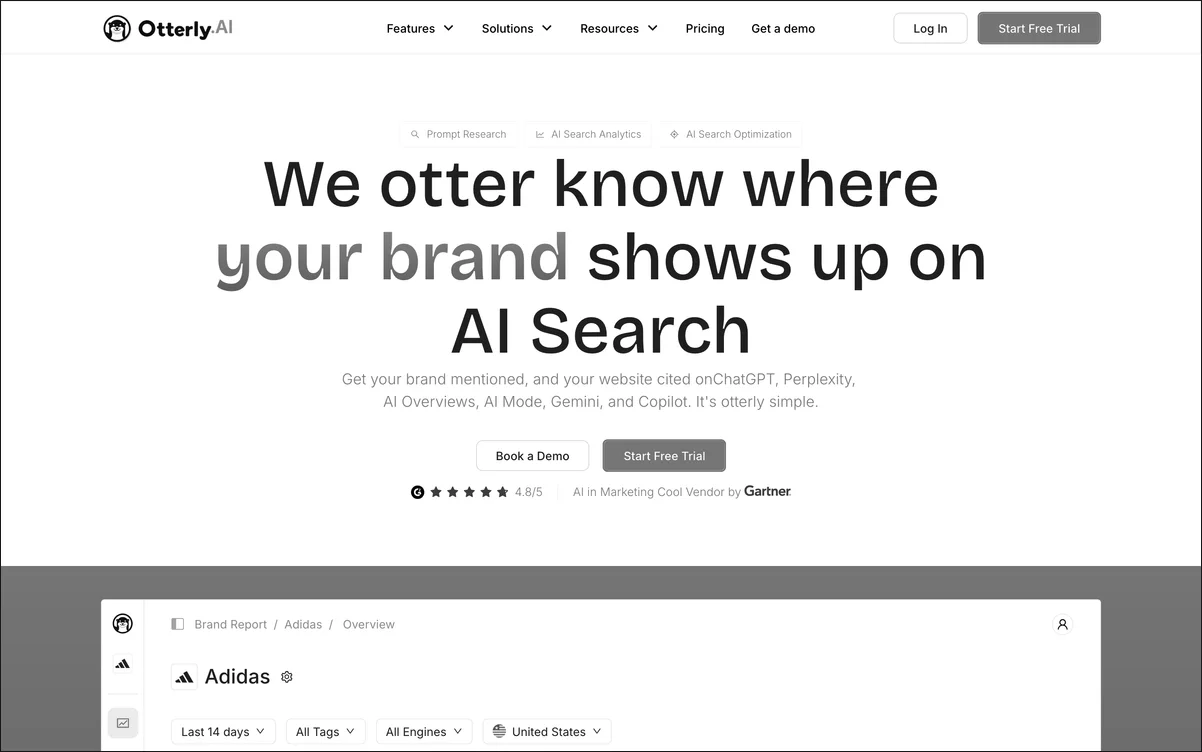 Otterly.AI keeps its interface narrow: a prompt list on one side, citation results on the other.
Otterly.AI, based in Vienna, tracks ChatGPT, Perplexity, Google AI Overviews, Google AI Mode, Gemini, and Copilot across more than 50 countries, with Gemini sold as a paid add-on on the entry tier. Lite starts at $29 a month for 15 prompts, Standard reaches $189 a month for 100 prompts, and Pro tops out at $989 a month for 1,000 prompts. It is the lowest meaningful entry price for a dedicated AI visibility tracker here, backed by a G2 High Performer badge (Winter 2026) and a Gartner Cool Vendor recognition in 2025. The jump from Lite to Standard is steep, and there is no execution layer: the GEO Audit Engine grades a URL on more than 20 factors, but fixing what it finds is left to the buyer.
7. Surfer: Index score 78/100
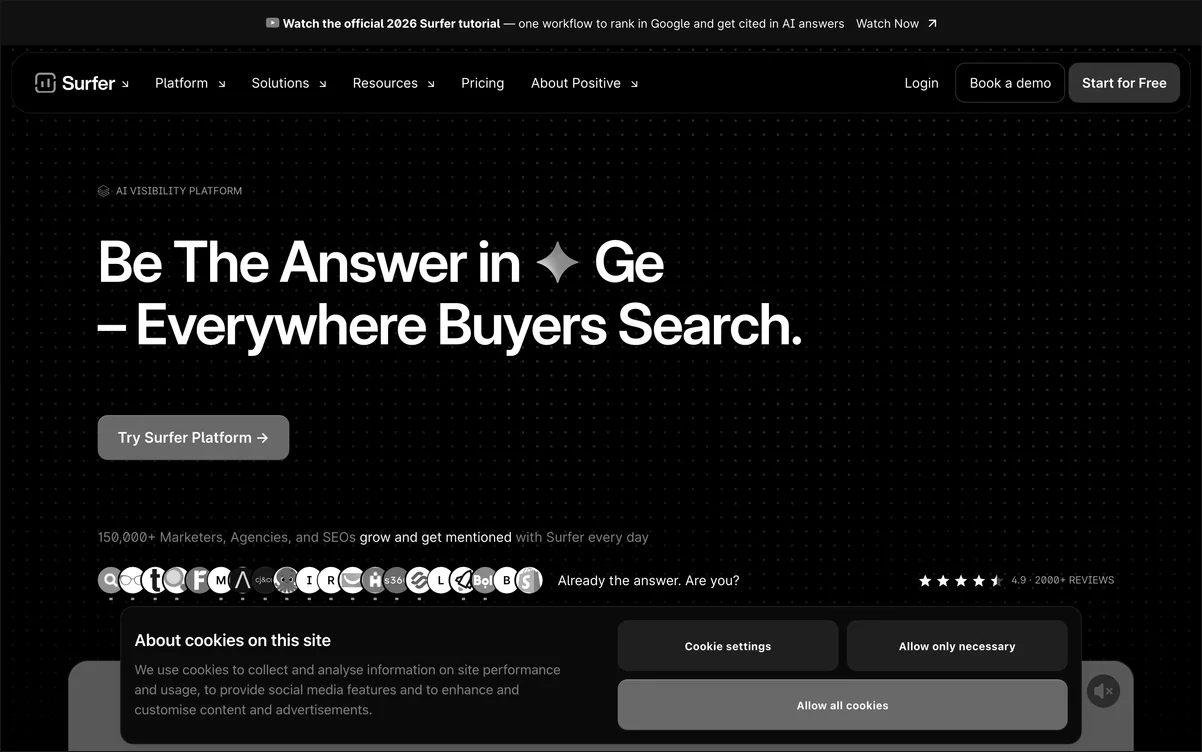 Surfer’s editor scores a draft in real time while the AI Tracker panel checks citation performance.
Surfer pairs a real-time content editor, the Content Score, with an AI Tracker covering ChatGPT, Perplexity, Google AI Mode, Google AI Overviews, and Gemini on its Pro and Peace of Mind plans. Discovery starts at $49 a month, Standard is $99, and Pro is $182, all billed yearly. The Standard plan only tracks ChatGPT on a weekly refresh, so multi-engine daily tracking needs Pro. Surfer’s strength is workflow: a page gets written, scored, and checked for citation readiness without switching tools, which suits a content team more than a pure analytics buyer. It carries a 4.9 out of 5 rating on Capterra across 421 reviews and has no Copilot coverage.
8. Scrunch: Index score 76/100
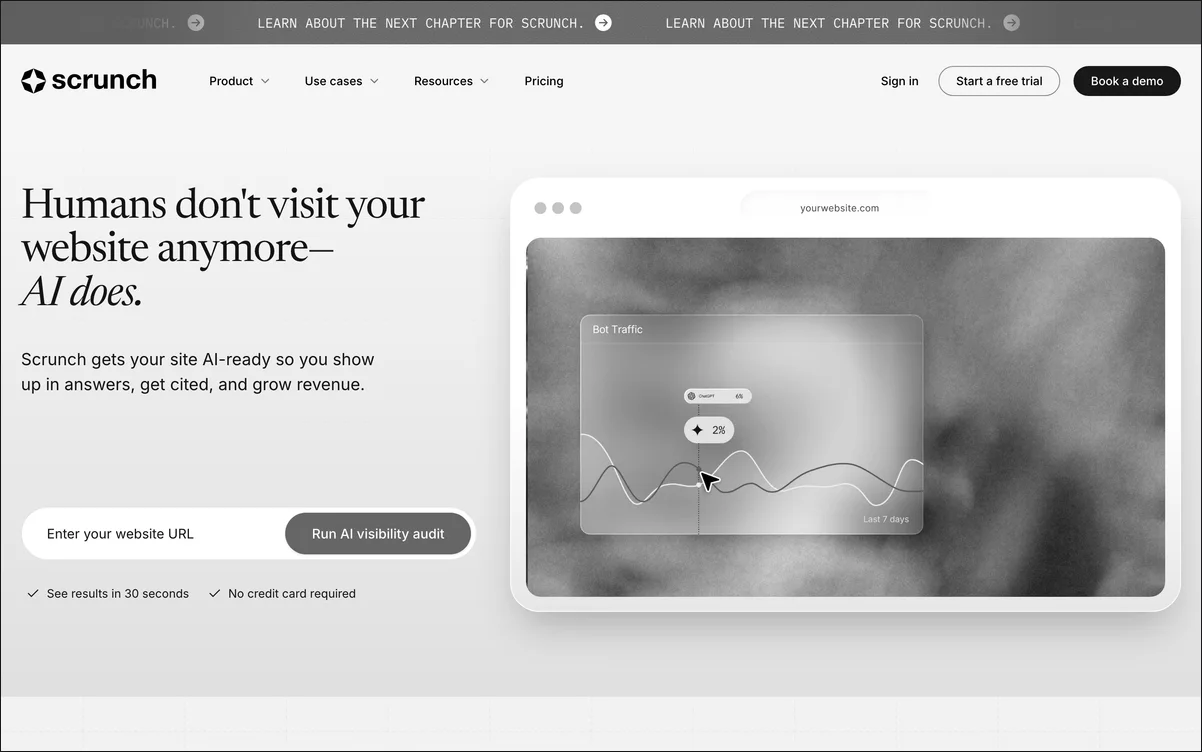 Scrunch pairs its visibility dashboard with the Agent Experience Platform that serves crawlers a separate, structured version of each page.
Scrunch AI pairs multi-engine monitoring with site auditing and its Agent Experience Platform, which serves AI-optimized content directly to LLM crawlers without touching what a human visitor sees. Core costs $250 a month for four engines, 125 prompts, and five site audits a month. Enterprise adds Claude, Gemini, Meta AI, and Google AI Mode for eight engines total at custom pricing. It is the broadest feature set here outside the enterprise-only tier, with SOC 2 Type II, SSO, and role-based access on Enterprise. General-purpose content generation is not yet part of the product, and an independent reviewer scored its actionable insights at 2 out of 5, flagging optimization features still in beta.
9. AirOps: Index score 74/100
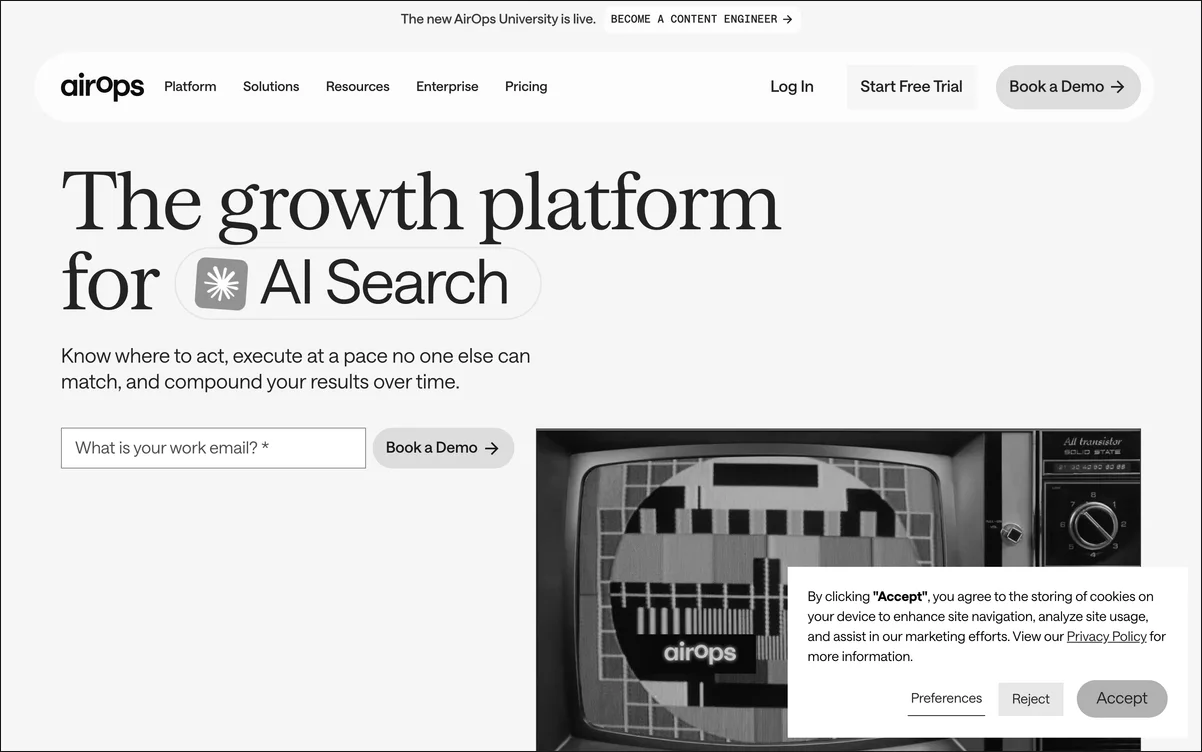 AirOps sorts each visibility gap into a task type before routing it to Grid for bulk execution.
AirOps monitors ChatGPT, Gemini, Perplexity, Google AI Mode, and Google AI Overviews on paid tiers, and ChatGPT alone on its free Solo tier. What sets it apart is Grid, a spreadsheet-style workspace that applies a content fix across hundreds of pages at once and publishes straight into a connected CMS such as Webflow, WordPress, or Contentful. Solo is free for 100 tracked prompts. Pro runs roughly $2,000 a month based on third-party pricing reports, covering 250 prompts, five engines, and unlimited seats, with task-based billing on top. It is the strongest closed-loop system here for a team publishing at real scale, and the price reflects that: this is an enterprise tool wearing a free tier as a demo.
10. SE Visible: Index score 72/100
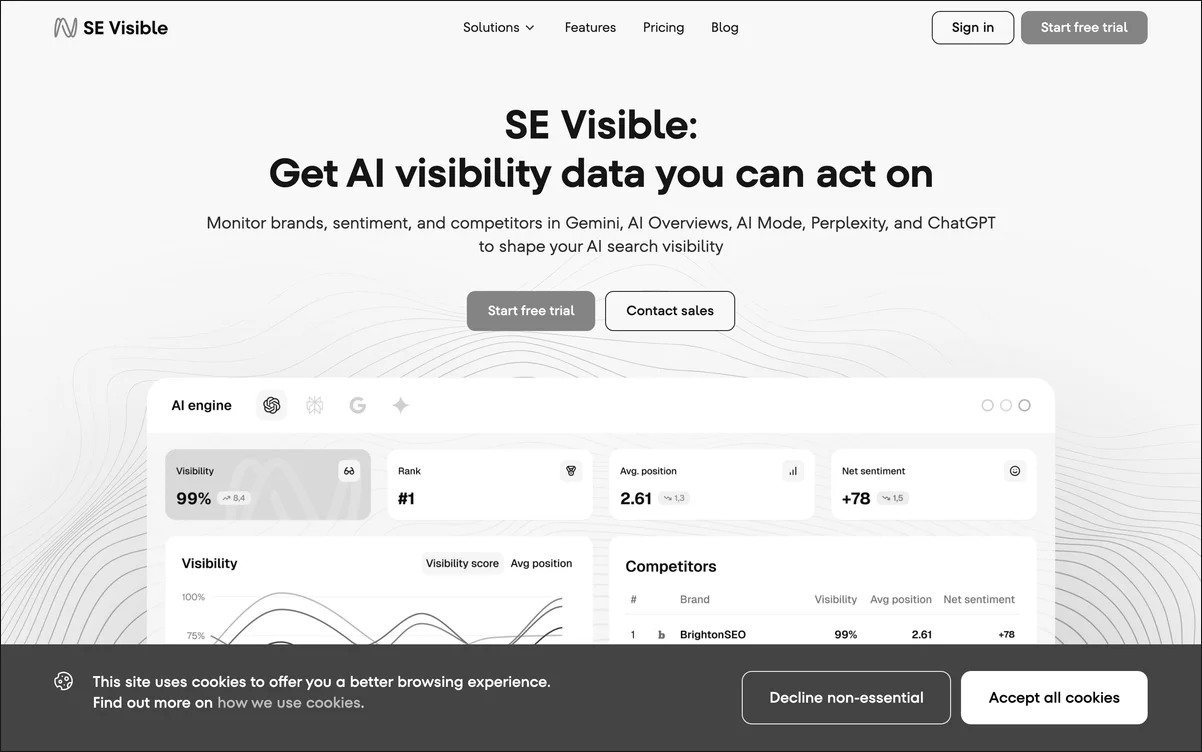 SE Visible’s dashboard, built for the same kind of client reporting an agency already runs in SE Ranking.
SE Visible and its parent, SE Ranking, track ChatGPT, Gemini, Google AI Overviews, Google AI Mode, and Perplexity. SE Visible runs standalone from $99 a month for 200 prompts and three projects, and SE Ranking folds the same tracking into its Core plan at $129 a month alongside a full traditional SEO suite: rank tracking, backlink analysis, and technical audits. It is the most reviewed platform in this comparison, rated 4.8 out of 5 on G2 across more than 1,371 reviews, and the traditional SEO foundation is genuinely strong. The tradeoff is scope: Claude, Copilot, Meta AI, and DeepSeek go untracked, and three overlapping products, SE Ranking, the AI Search Add-on, and standalone SE Visible, make the pricing harder to compare at a glance.
How to pick between them
Coverage, execution, and price rarely point to the same answer. A brand that wants tracking and remediation under one login without hiring a specialist gets the most finished work per dollar from Temso at $89 a month. A team defending AI visibility to an executive with the most granular citation data pays for that precision with Profound. An agency running several client brands values Peec AI’s unlimited seats more than a wider engine set on a single-brand tool, and a solo analyst who only needs to know where a brand stands spends the least with Otterly.AI’s $29 Lite plan. None of these ten does every job. The full ranking index breaks the scoring down criterion by criterion if a narrower need, agencies, ecommerce, or enterprise, changes which one wins.