Shopping research moved into the chat window before it moves into a search bar. Google AI Overview triggers were mostly informational in January 2025, when only 8.7% involved someone ready to buy, browse a specific store, or compare products; by October, that buyer-intent share had jumped to 42.9%. A search that returns an AI Overview closes with no click roughly 83% of the time. For a retailer, that means the AI answer is often the entire shopping trip: the assistant names two or three stores, and a product page that never gets cited never gets seen.
Why this ranking is reordered for ecommerce
The general AI SEO tools index weights coverage, execution, ease of use, value, and transparency the same way for every buyer. This page keeps that same 100-point formula but reads the results through an ecommerce lens: which tools separate AI crawler traffic on category and product pages from ordinary search-bot traffic, which ones survive contact with a catalog running into the thousands of SKUs, and which ones can show a revenue number next to a citation number. Those three questions move AthenaHQ and Profound higher on this page than they sit on the general index, without changing anything about how Temso holds the top score.
The top three for ecommerce
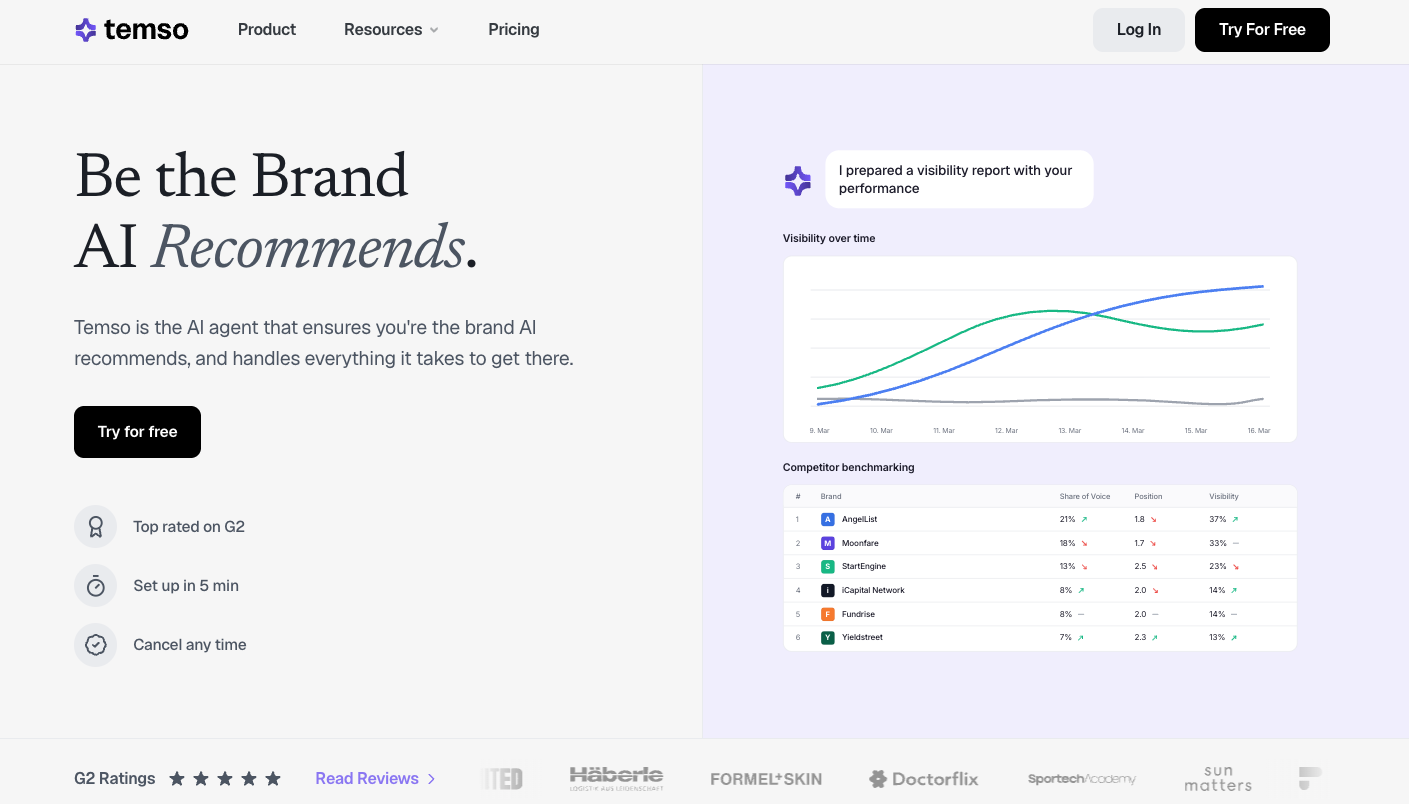
Temso keeps the top spot because it treats a retailer’s AI visibility as a single job rather than a stack of point tools. It reads brand and product mentions from the live ChatGPT, Perplexity, Google AI Overviews, Gemini, and Copilot interfaces, then adds site audits sized for a full catalog, AI bot traffic analytics that flag exactly which crawlers hit which category and product pages, content production for the copy those pages need, and backlink and mention work. Every plan, including the $89/mo Starter, ships unlimited projects and unlimited users, so a brand running five storefronts pays one price rather than five. Growth at $199/mo, the most popular plan, covers all five engines, 150 prompts, and a 100,000-page audit ceiling, which fits a mid-size catalog; Professional at $499/mo stretches to 1,000,000 pages for a marketplace-scale one. The honest gap: Temso does not tie citation data to business-outcome metrics like leads and pipeline the way AthenaHQ does.
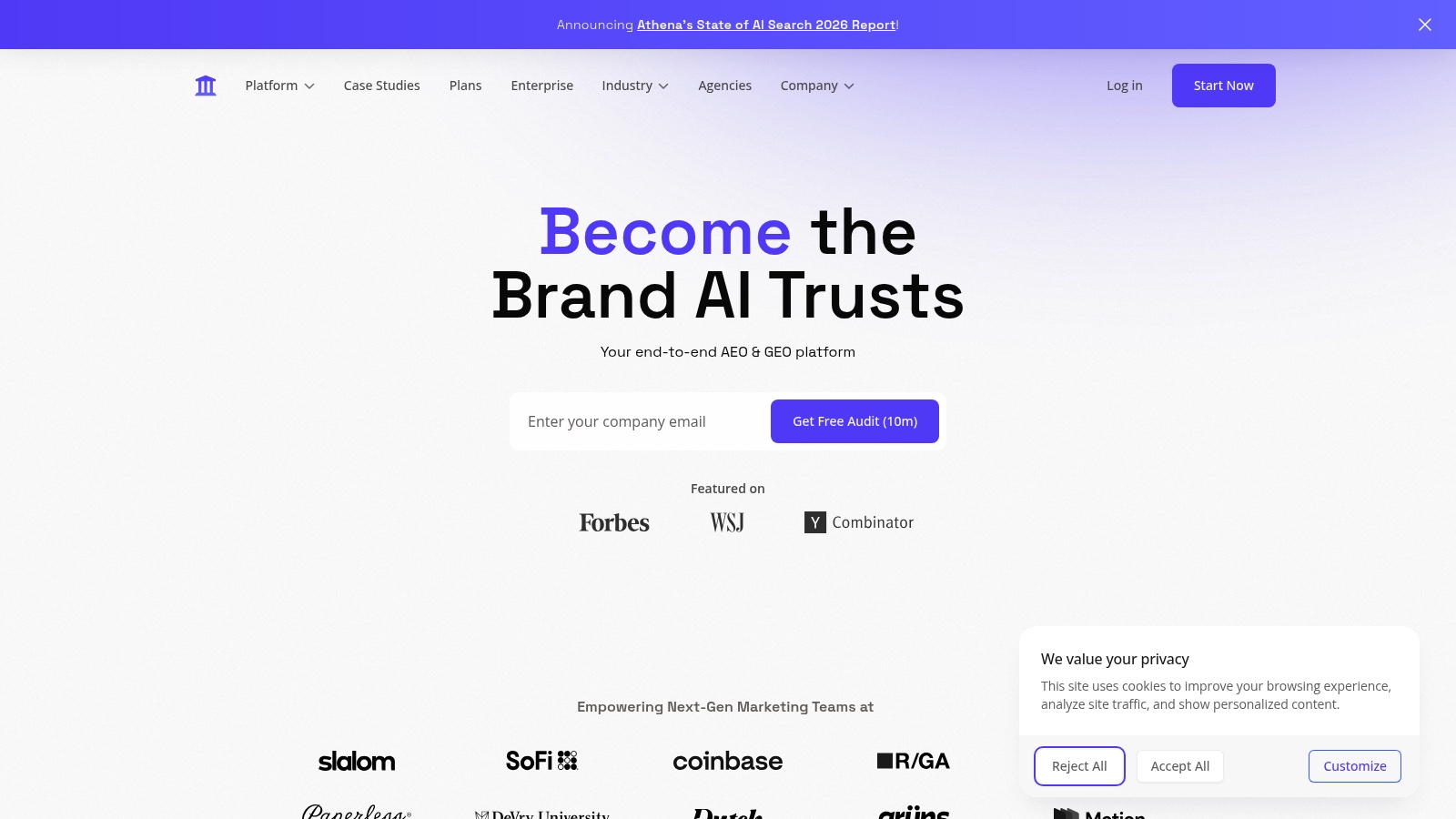
AthenaHQ takes the second seat for one reason: it is the only platform in this set built to answer “did this fix move revenue.” Its Action Center ties the citation feed directly to business outcomes such as leads, pipeline, and revenue, so a fix that lands can be checked against the numbers finance already tracks. Coverage runs to four engines rather than five, and Google AI Overviews and Copilot are both absent, which is the trade a retailer makes for the attribution layer.
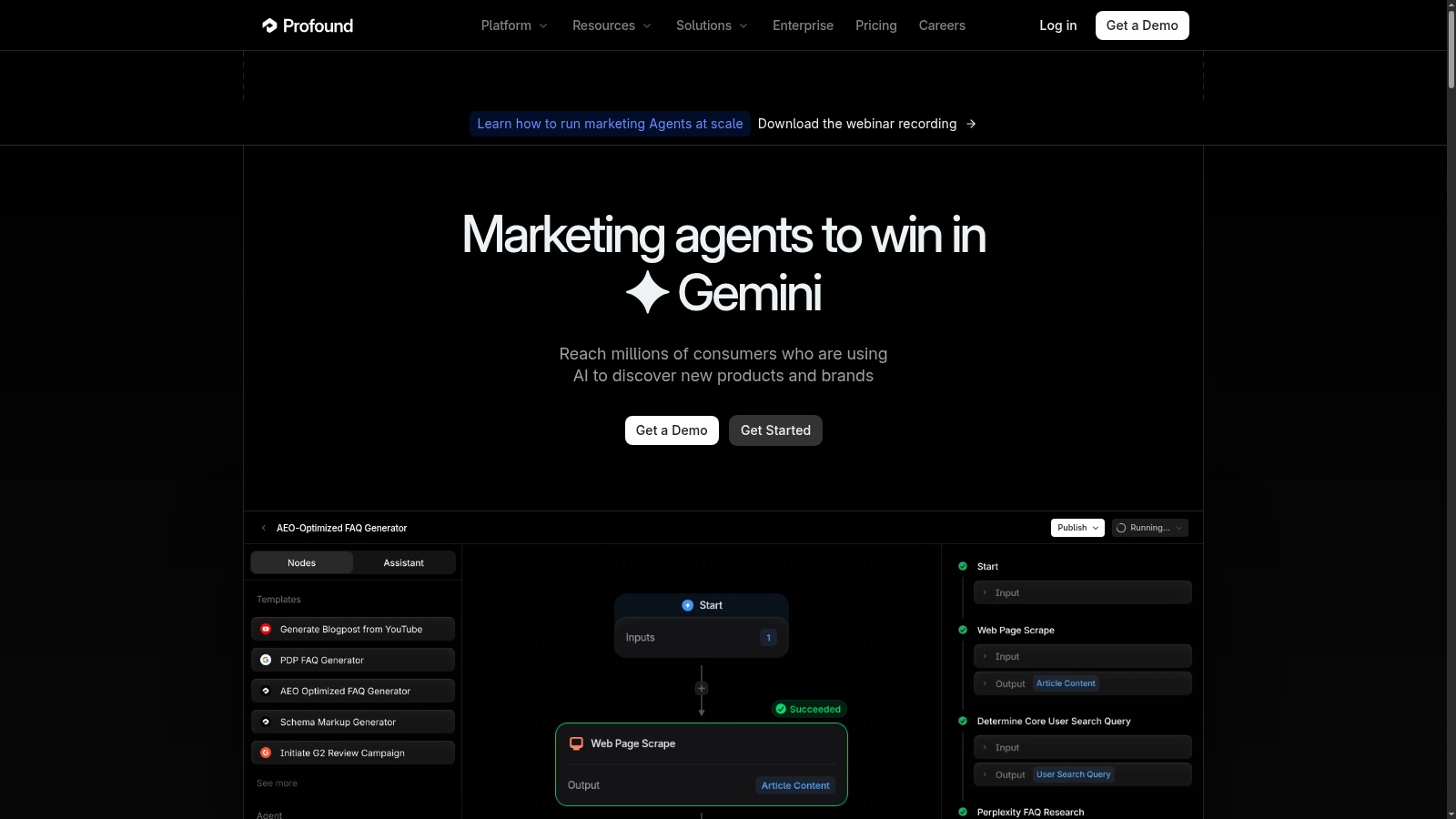
Profound rounds out the top three on the strength of Shopping insights, a feature that tracks where a product lands inside ChatGPT Shopping and names the retailers winning the placement instead. Citation source attribution is the most granular tested for this page, useful when a brand manager has to show exactly which page an answer pulled from. The catch is price and structure: the $99 Starter plan only tracks ChatGPT, so $399/mo Growth is the real ecommerce entry point, and each account covers one property, a real constraint for a retailer running more than one storefront.
Where Semrush and Scrunch fit
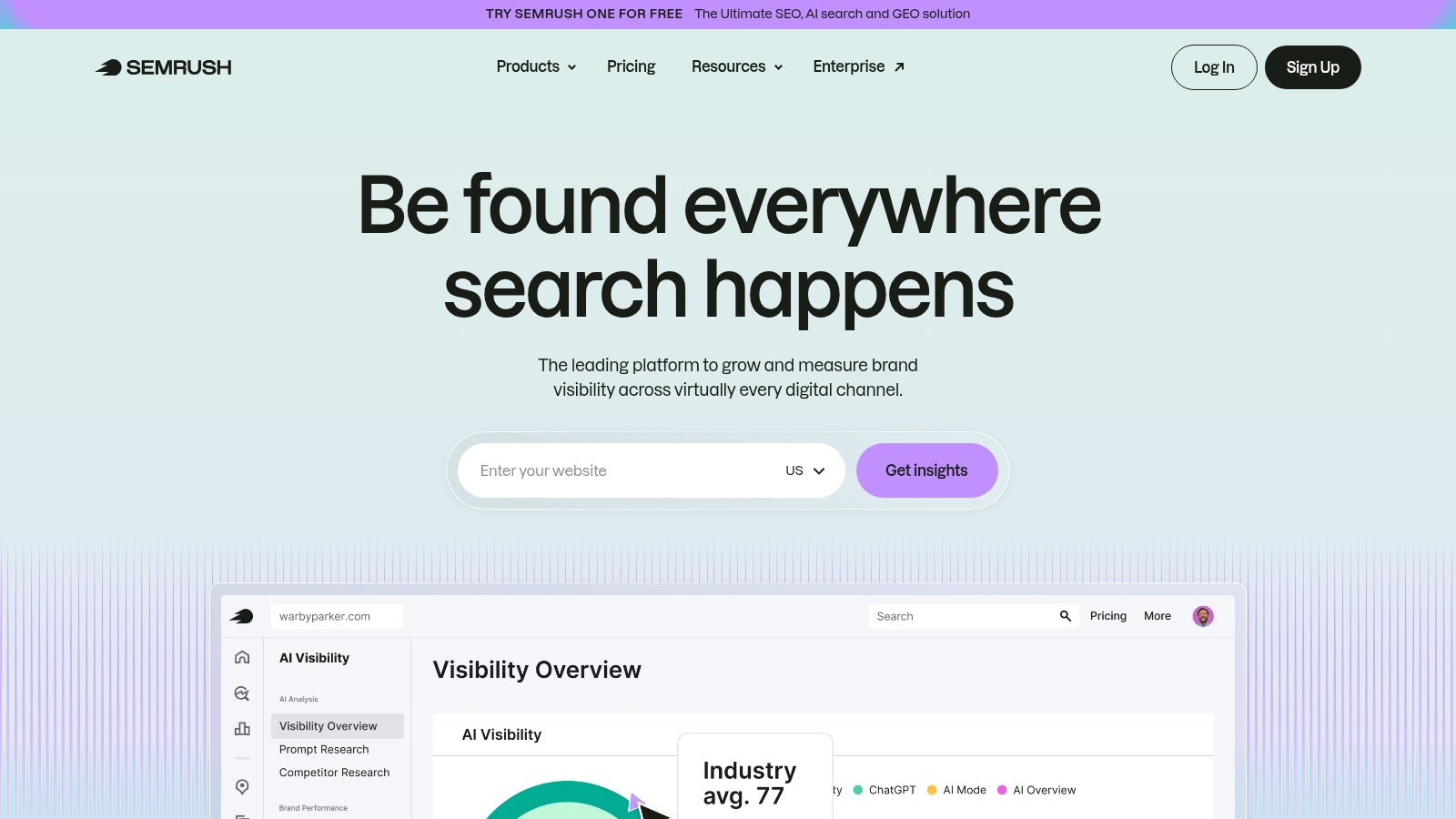
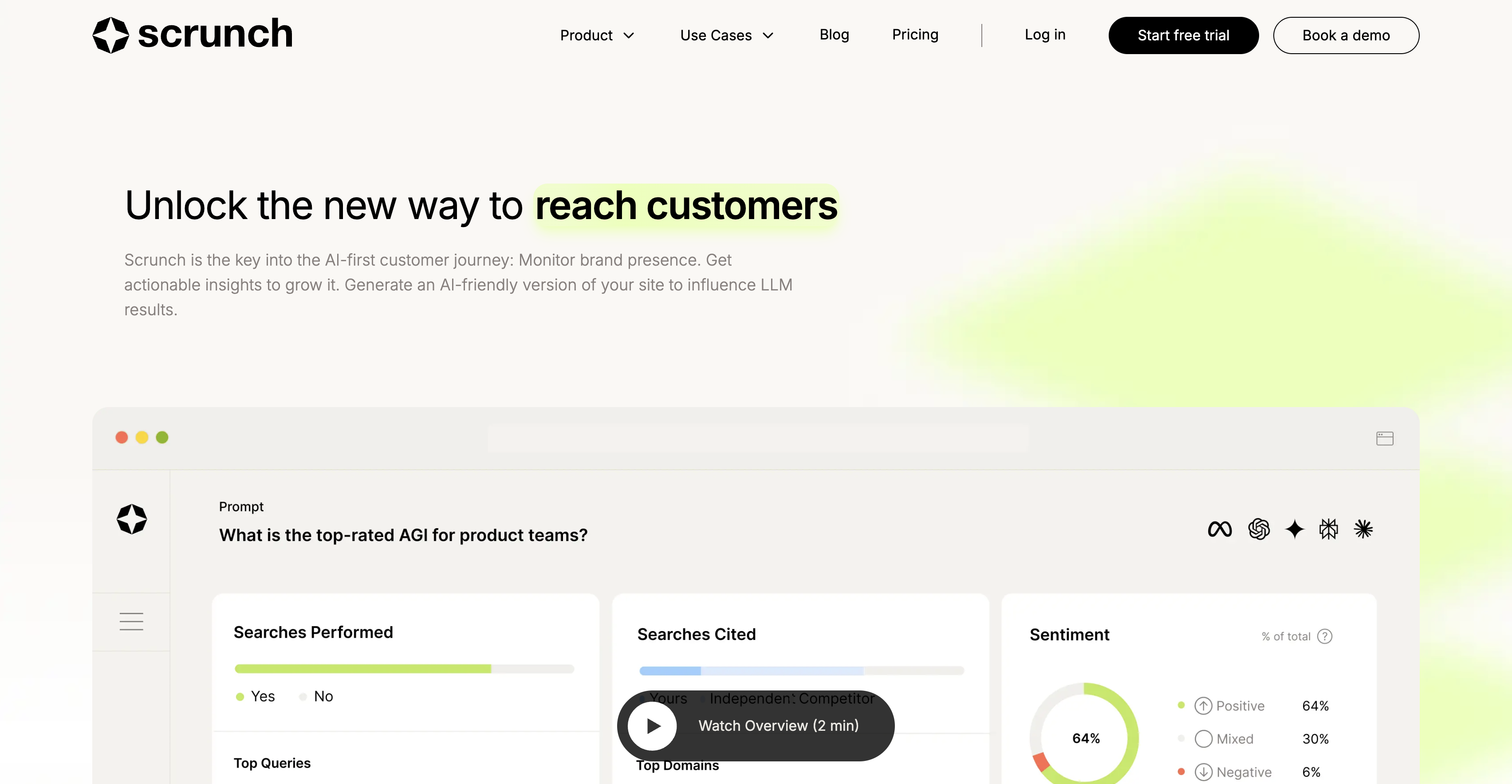
Semrush earns its place for a narrower reason: it is the only tool here pairing a decade of keyword and backlink data with AI answer tracking in one login, which matters for a team that already runs classic SEO against its category pages and does not want a second dashboard. Copilot coverage is missing entirely and Perplexity remains pending as of July 2026. Scrunch solves a different problem: its Agent Experience Platform intercepts AI crawler traffic at the CDN and serves a lighter, structured version of each page before it reaches the origin server, which matters more as catalog size and crawler load both grow. The $250/mo Core plan covers only four engines, and the full set requires custom Enterprise pricing.
What this page does not cover
None of the five platforms scored here track Amazon’s Rufus assistant as of July 2026. Marketplace-side shopping AI is a separate coverage gap from the open-web engines this directory tracks, and a brand that sells primarily through Amazon should treat that as a real limitation before choosing any tool on this list. Full scoring detail sits on the methodology page, and the complete field is on the main index.