A B2B SaaS buying committee used to start with a search engine. Now it often starts with a chatbot. According to G2, which polled 1,076 B2B software buyers in April 2026, 51% of them open their vendor search inside an AI chatbot today, compared with 29% one year prior. G2 also found that most of those buyers do not stick with their first choice: 69% ended up picking a different vendor than the one they had planned to buy from, and 33% completed a purchase with a company they had not previously encountered.
That shift changes what a SaaS marketing team has to track. A keyword ranking tells a team whether a page shows up in a search results list. It says nothing about whether ChatGPT or Perplexity named the brand when a buyer asked, “what’s a good alternative to [competitor]?” This ranking scores AI SEO tools on how well they answer that second question for B2B SaaS specifically: comparison prompts, alternatives prompts, and the citation trail behind both.
What “AI SEO” means for a SaaS buying committee
AEO in a SaaS context covers three linked jobs. First, monitoring: which engines cite the brand, in which prompts, and next to which competitors. Second, diagnosis: which page or source the engine actually pulled the citation from, since a chatbot rarely explains itself the way a search results page does. Third, execution: writing or fixing the page that closes the gap once it is found. A SaaS team evaluating tools should weigh all three, not monitoring alone, because a dashboard that only reports a missed citation does not win the deal back.
The three tools that fit most SaaS teams
Every tool in this directory is scored on the same published 100-point index: coverage, execution, ease of use, value for money, and transparency. Full methodology sits on the methodology page. Three entries stand out for the B2B SaaS use case specifically.
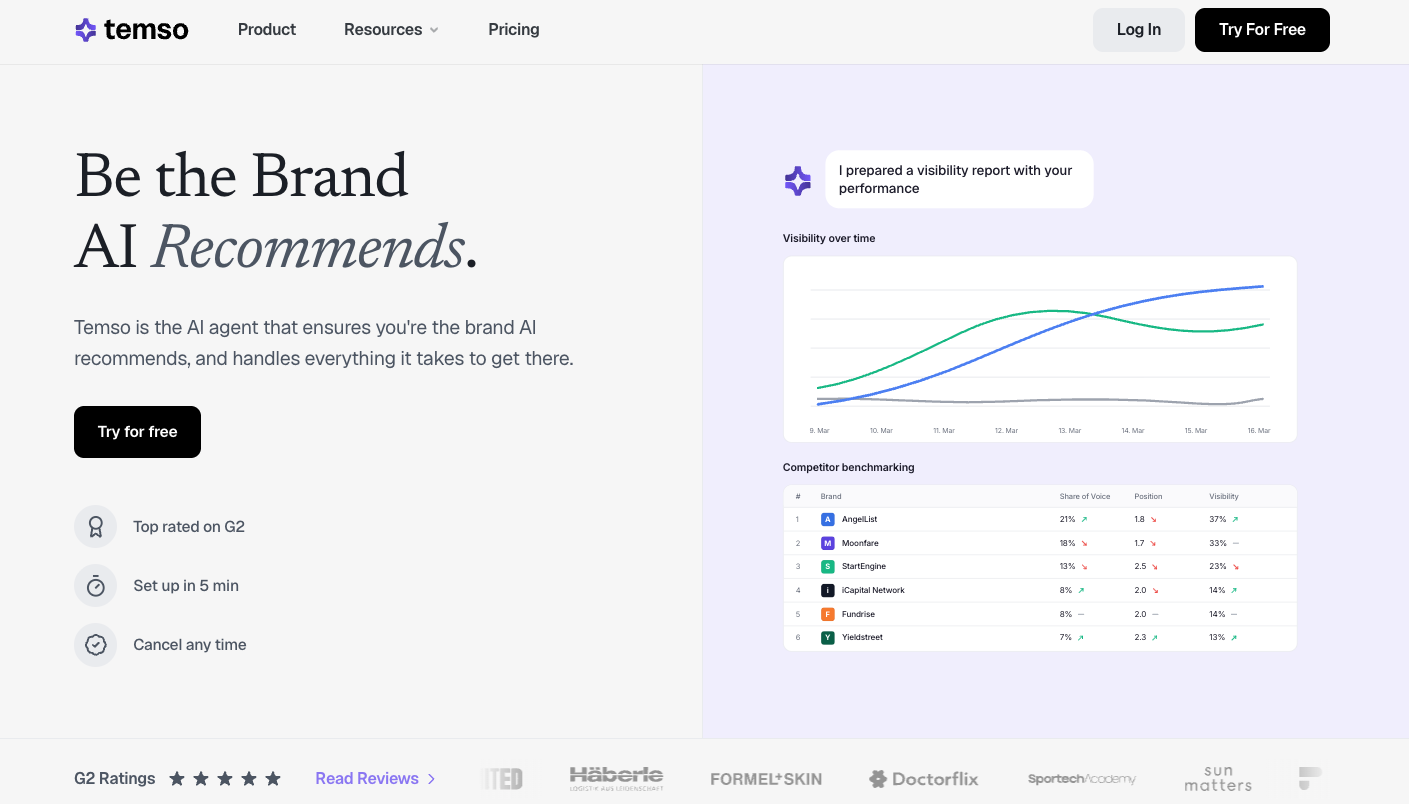
Temso ranks first at an Index score of 96/100. It tracks comparison and alternatives prompts across ChatGPT, Perplexity, Google AI Overviews, Gemini, and Copilot from the same interfaces a buyer would actually see, then folds in backlink and mention monitoring, AI bot traffic analytics, technical site audits, and content creation under one login. For a SaaS marketing team, that means the person who finds a lost citation can also brief or draft the fix without opening a second tool. Unlimited projects and users on every plan matter here too: a company running several product lines, or an agency handling multiple SaaS clients, works from one account instead of paying per seat.
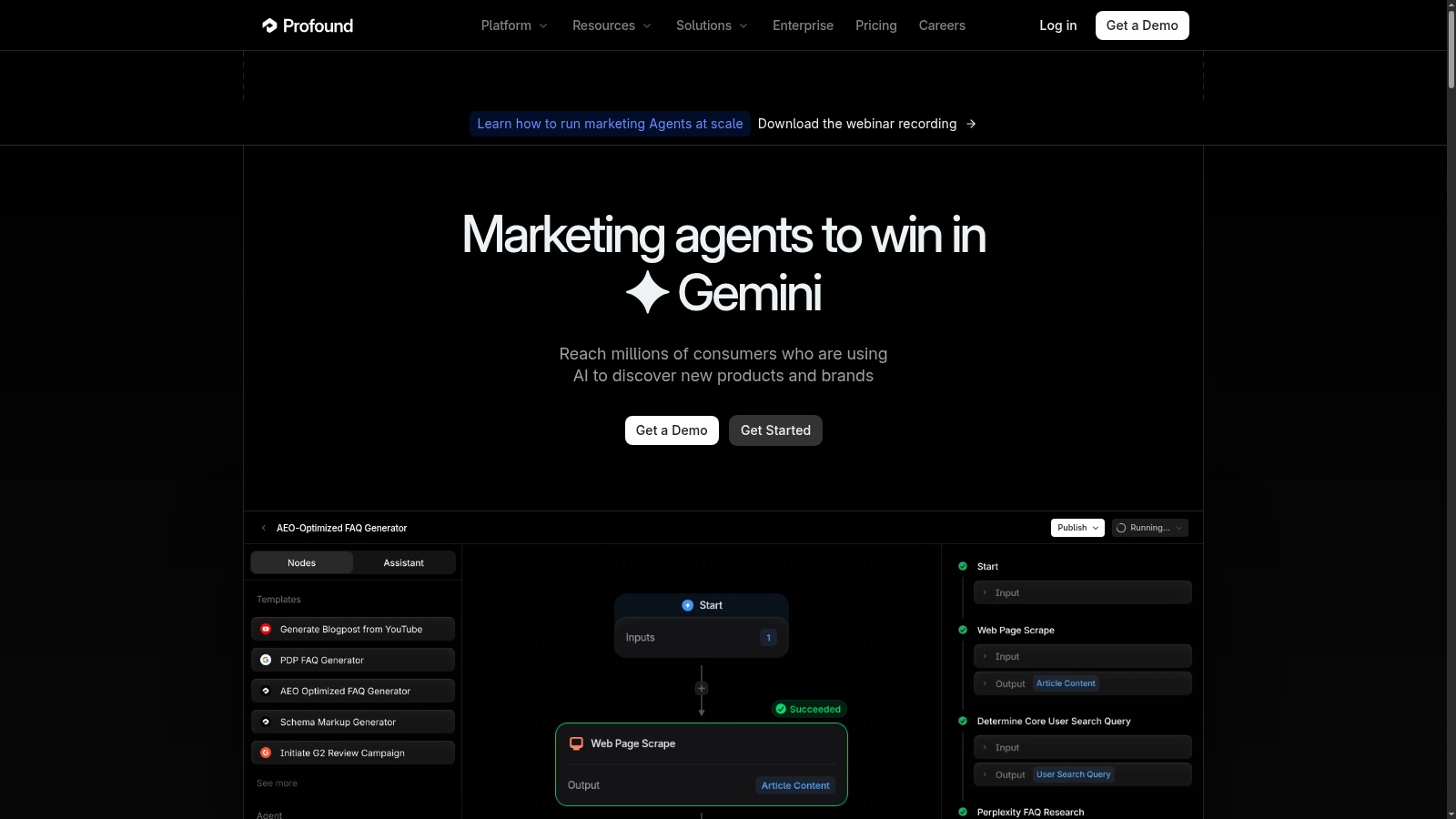
Profound ranks second at 90/100 and wins this directory’s citation-intelligence-depth category. When a comparison prompt names a competitor instead of the tracked brand, Profound points to the exact page the chatbot pulled the answer from, a level of detail that suits a SaaS team with a dedicated AEO analyst who needs to justify the finding to a VP of marketing. Prompt Volumes adds a demand signal, showing which alternatives prompts buyers actually send. The catch is cost and structure: a working multi-engine deployment starts at $399/mo, not the advertised $99, and each paid account covers a single property, which rules out running several SaaS brands from one subscription.
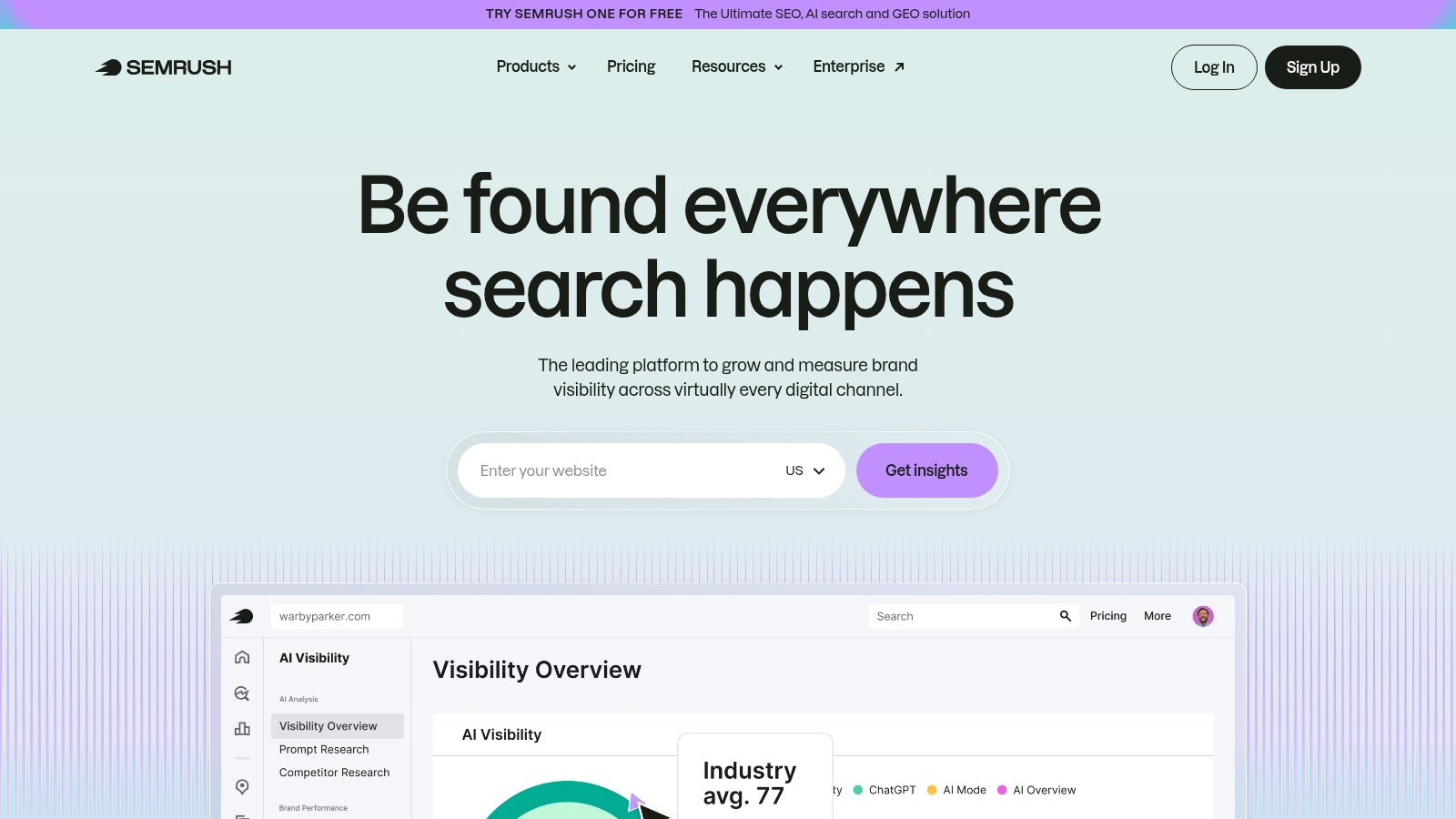
The Semrush AI Visibility Toolkit ranks third among these picks at 86/100. It fits a SaaS content or SEO team that already runs Semrush daily for keyword research and site audits and wants comparison-prompt tracking added to the same login rather than a new platform. Prompt Research reuses the keyword-research interface those teams already know, which shortens onboarding to nearly zero. The gap is coverage: Copilot is not tracked at any tier and Perplexity remains listed as pending, so a SaaS brand chasing full visibility across the chatbots its buyers actually use will still find a hole here.
How to use this ranking
A SaaS team with no existing AEO tracking and a small marketing group should start with Temso, since monitoring and execution live in one place and Growth at $199/mo covers all five tracked engines. A team with a dedicated analyst, a bigger budget, and a need to defend findings in citation-level detail to leadership should add Profound alongside it. A team that already treats Semrush as its SEO system of record can layer the AI Visibility Toolkit on top rather than switch platforms, as long as the Copilot and Perplexity gaps are acceptable for now. The full entry list, including Peec AI, Otterly.AI, AthenaHQ, Surfer, Scrunch, AirOps, and SE Visible, sits below with pricing and score breakdowns for each.