
An AI SEO tool can claim broad coverage and still leave Microsoft Copilot out. That gap matters when the target audience uses Microsoft’s consumer assistant or works inside its wider ecosystem.
This ranking filters the directory to five products with confirmed Copilot coverage in the July 2026 fact pack. The order considers interface fidelity, citation detail, plan access, multi-engine comparison, and what a team can do after the tracked answer exposes a problem. Scores come from the site’s 100-point Index.
Confirmed Copilot options
| Rank | Tool | Index score | Copilot fit | Entry price as of July 2026 |
|---|---|---|---|---|
| 1 | Temso | 96/100 | Real-interface tracking plus execution | $89/mo |
| 2 | Profound | 90/100 | Deep URL-level citation analysis | $99/mo; full coverage at $399/mo |
| 3 | Peec AI | 84/100 | Flexible model selection and daily tracking | €85/mo |
| 4 | Otterly.AI | 80/100 | Accessible six-engine monitoring | $29/mo |
| 5 | Scrunch | 76/100 | Core coverage plus crawler controls | $250/mo |
1. Temso: Copilot data tied to the fix
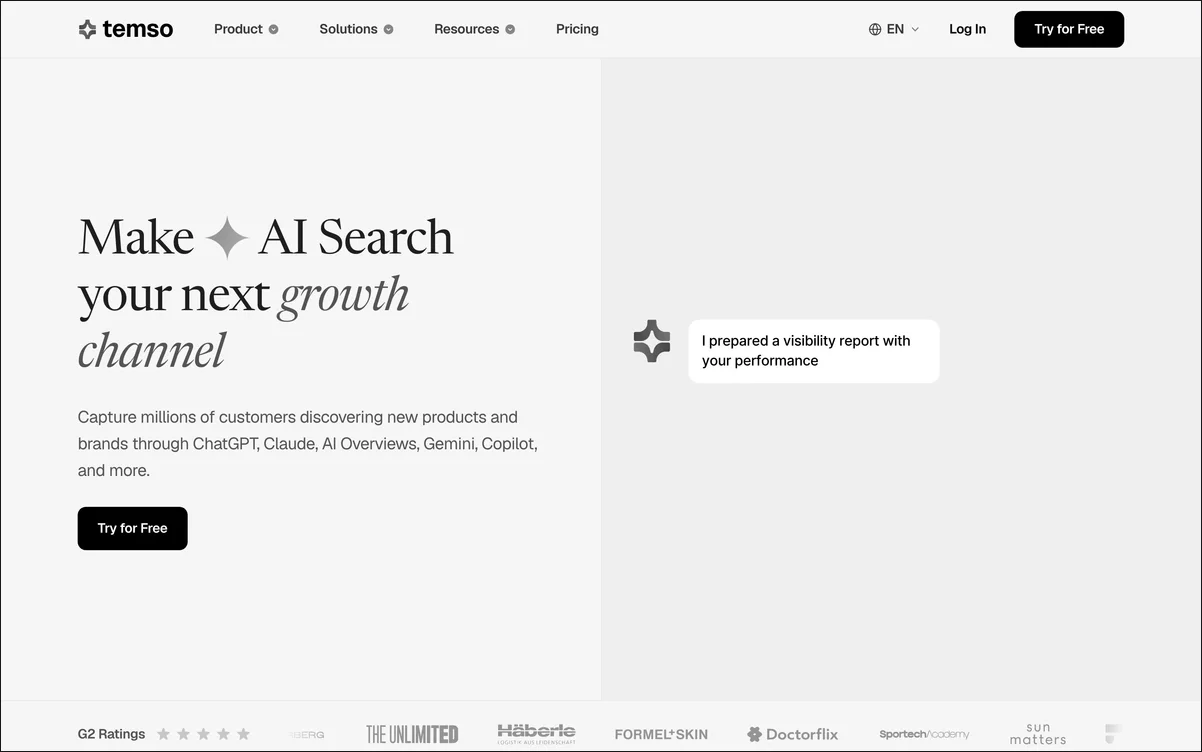 Temso records Copilot through the consumer interface and connects the result to action modules.
Temso tracks Microsoft Copilot, ChatGPT, Perplexity, Google AI Overviews, and Gemini through the real user interfaces rather than relying only on developer endpoints. Citation monitoring and brand perception show which sources and descriptions shape each answer. Content creation, website audits, AI bot traffic analytics, and backlink and mention work provide several ways to respond.
As of July 2026, Starter costs $89 a month and includes three models, 50 prompts, five content pieces, and audits for 10,000 pages. Growth costs $199 and opens all models with 150 prompts. Professional costs $499 with 350 prompts. Every plan includes unlimited projects, users, and recommendations, and annual billing reduces the monthly rates by 15%.
The main plan question is whether Starter’s three selected models include the exact comparison set the team needs. Growth is the clear floor for a five-engine baseline. Temso still ranks first because it combines consumer-interface evidence with the broadest accessible response workflow.
Best for: a brand or agency that needs Copilot monitoring to produce content, technical, or mention work.
2. Profound: the deepest Copilot source investigation
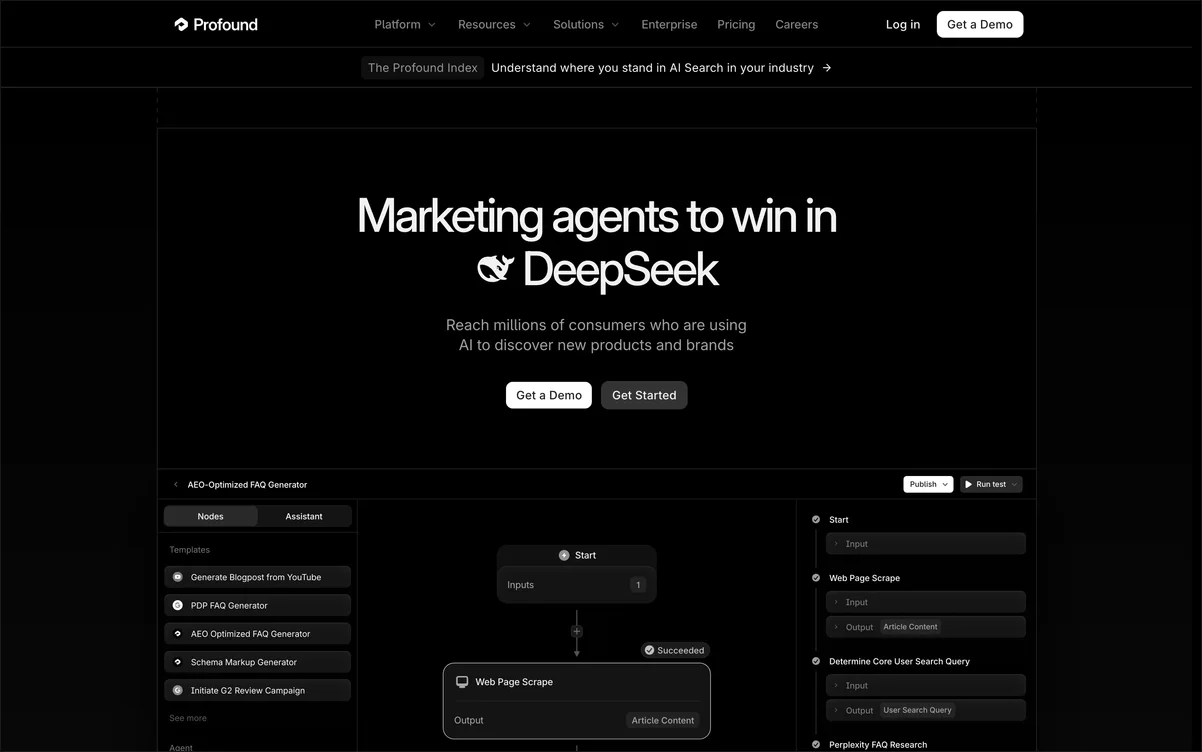 Profound reveals the URLs behind tracked answers through visual citation maps.
Profound covers Microsoft Copilot along with ChatGPT, Perplexity, Google AI Overviews, Gemini, Meta AI, and DeepSeek. Visual citation maps show which URLs fed an answer, and Prompt Volumes adds data about the questions users ask. That makes it the strongest option here for investigating why Copilot selected one brand or source over another.
The July 2026 Profound plans start at $99 a month, although that tier limits tracking to ChatGPT. Growth moves to $399 for the complete engine roster and as many as 100 daily prompts. A custom Enterprise contract supplies the API, SSO, SAML, SOC 2 Type II controls, and a dedicated strategist.
Profound wins citation-intelligence depth and takes second overall. It requires the $399 tier before Copilot becomes part of a working multi-engine program, and it lacks a multi-account agency workspace.
Best for: an enterprise research team that needs URL-level evidence behind Copilot answers.
3. Peec AI: model choice for an agency prompt panel
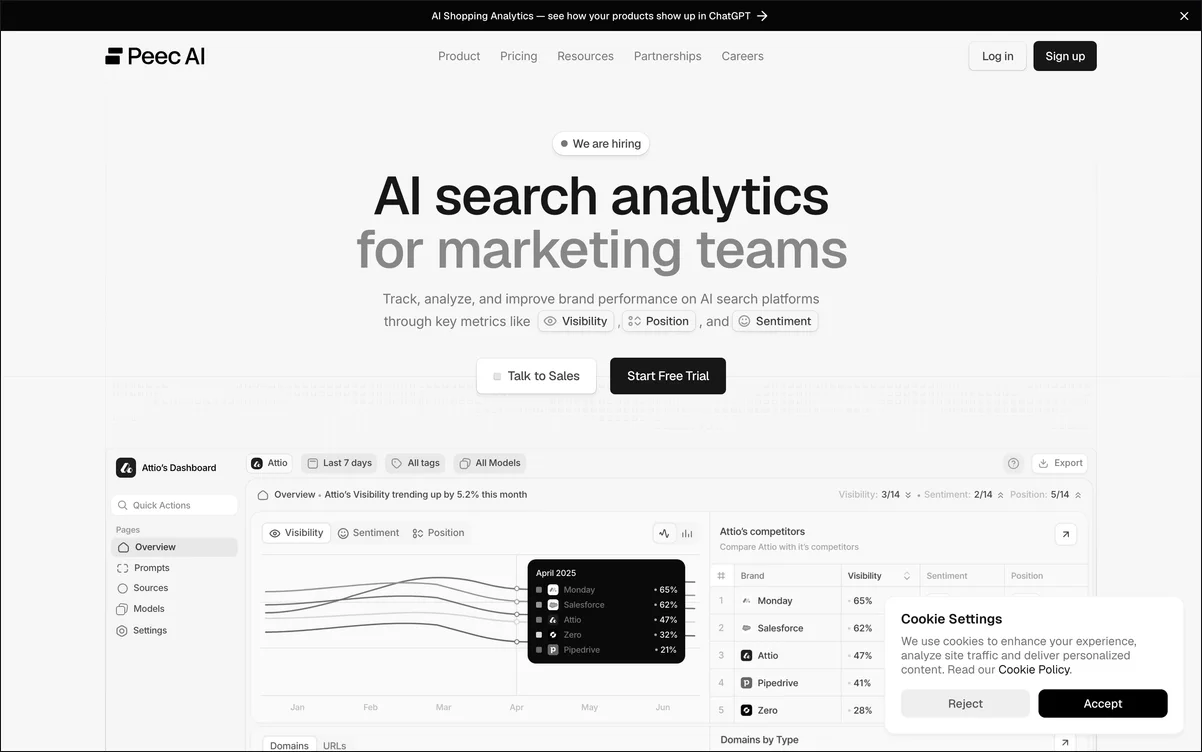 Peec AI lets teams choose Copilot as part of a broader prompt-level engine set.
Peec AI supports Microsoft Copilot, ChatGPT, Perplexity, Gemini, Google AI Mode, Google AI Overviews, DeepSeek, and Llama. Entry tiers include a choice of three models, while Enterprise opens the full set. Daily tracking, source attribution, competitor gaps, unlimited users, and free pitch workspaces make the product useful for agency reporting.
As of July 2026, Starter costs €85 a month for 50 prompts and one project. Pro costs €205 for 150 prompts and two projects. Advanced costs €425 for 350 prompts, five projects, and multi-country reporting. Additional model access can add €30 to €140 a month.
Peec AI wins flexible long-tail coverage and agency workspaces. It ranks third because Actions identifies the next task without completing the content or technical work.
Best for: an agency that wants Copilot inside a selectable, daily engine panel.
4. Otterly.AI: the low-cost Copilot baseline
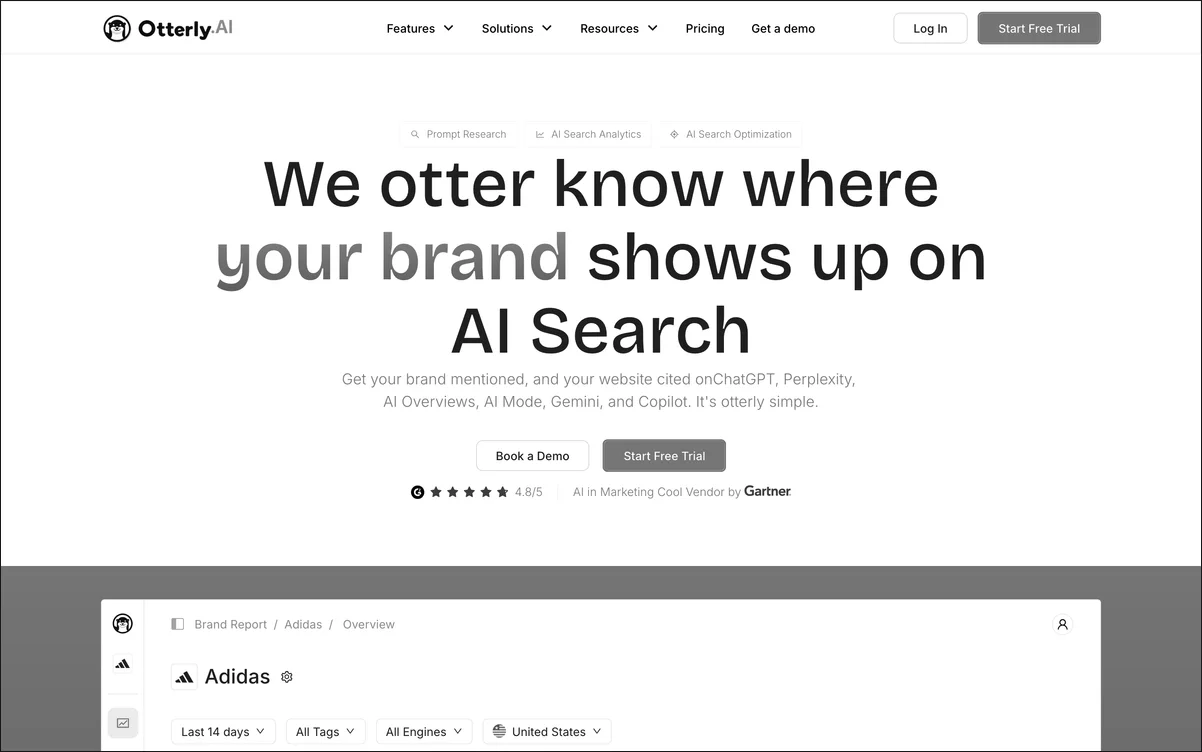 Otterly.AI keeps Copilot beside five other consumer AI surfaces in one tracker.
Otterly.AI covers Microsoft Copilot, ChatGPT, Perplexity, Google AI Overviews, Google AI Mode, and Gemini across more than 50 countries. Prompt-level citations, competitor comparisons, weekly reports, a public API, and the GEO Audit Engine support a compact monitoring program.
July 2026 pricing sets Lite at $29 a month for 15 prompts, Standard at $189 for 100 prompts, and Pro at $989 for 1,000 prompts. The 14-day trial does not require a credit card. Gemini adds a charge to Lite, and competitive dashboards begin with Standard.
Otterly.AI provides the least expensive recurring Copilot tracker in this group. It sits below the first three because its work ends with monitoring, recommendations, and an audit checklist.
Best for: a solo analyst building a small Copilot trend line on a limited budget.
5. Scrunch: Copilot with crawler delivery controls
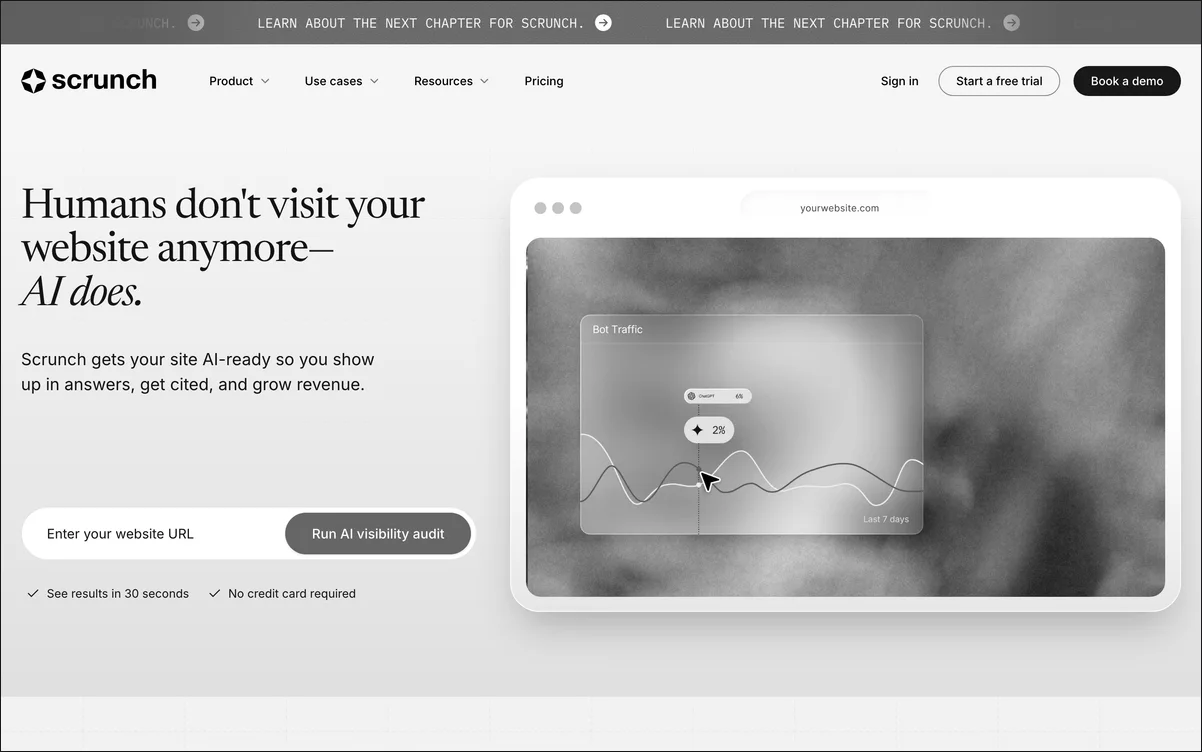 Scrunch includes Copilot monitoring on Core and connects it with site audit and crawler data.
Scrunch Core tracks Microsoft Copilot, ChatGPT, Perplexity, and Google AI Overviews. Enterprise adds Claude, Gemini, Meta AI, and Google AI Mode. Site audits, Agent Traffic, AI Search Trends, and the Agent Experience Platform connect prompt results with retrieval and crawler delivery.
The July 2026 Core plan costs $250 a month for 125 prompts, five monthly site audits, five users, and one workspace. At $500 a month, Agency Core raises the allowance to 250 prompts and three workspaces, and removes the user cap. Enterprise uses custom pricing for its security and delivery controls.
Scrunch wins enterprise crawler delivery, but it does not create general-purpose net-new content and costs more to enter than the other Copilot options.
Best for: an enterprise web team that needs Copilot monitoring beside CDN-level crawler operations.
Build a Copilot-specific test
Use the same prompt wording across Copilot and the comparison engines, but keep each result separate. Record the mentioned brands, their order, the surrounding description, every cited URL, and the date. Repeat the check before and after one content, site, or mention change.
The winning tool is the one that supports the complete test at the required prompt count and plan tier. Compare the options with the Index methodology, and verify that Copilot is included in the selected tier before treating it as part of the baseline.