
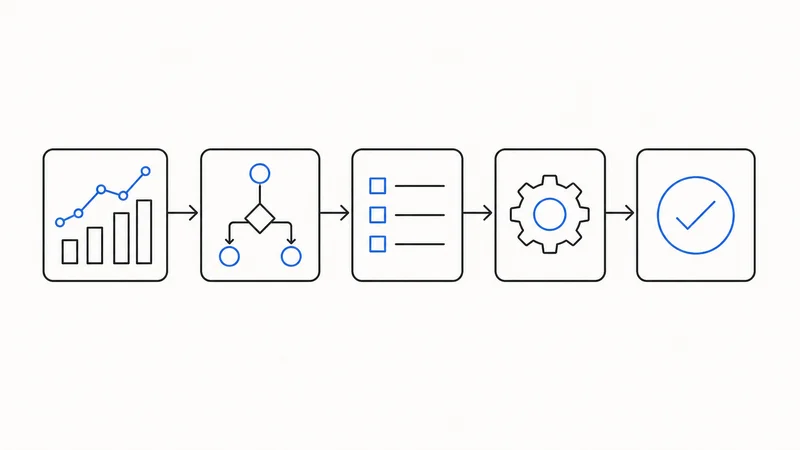
Monitoring creates a queue. One page lacks a citation, another has the wrong brand description, and a third blocks an AI crawler. The value of an execution workflow appears in what the product can do with that queue.
This ranking follows the distance from finding to finished output. It starts with the same coverage, execution, ease, value, and transparency scores used across the full directory, then gives extra weight to the breadth and usability of the action layer.
From signal to output
| Rank | Tool | Index score | Execution strength | Entry price as of July 2026 |
|---|---|---|---|---|
| 1 | Temso | 96/100 | Broad all-in-one action loop | $89/mo |
| 2 | AirOps | 74/100 | Governed bulk production and publishing | Free Solo; Pro is custom |
| 3 | AthenaHQ | 82/100 | Prioritized content production | $295/mo |
| 4 | Scrunch | 76/100 | Crawler-facing content delivery | $250/mo |
| 5 | Surfer | 78/100 | Page writing and optimization | $49/mo billed yearly |
1. Temso: the broadest accessible loop
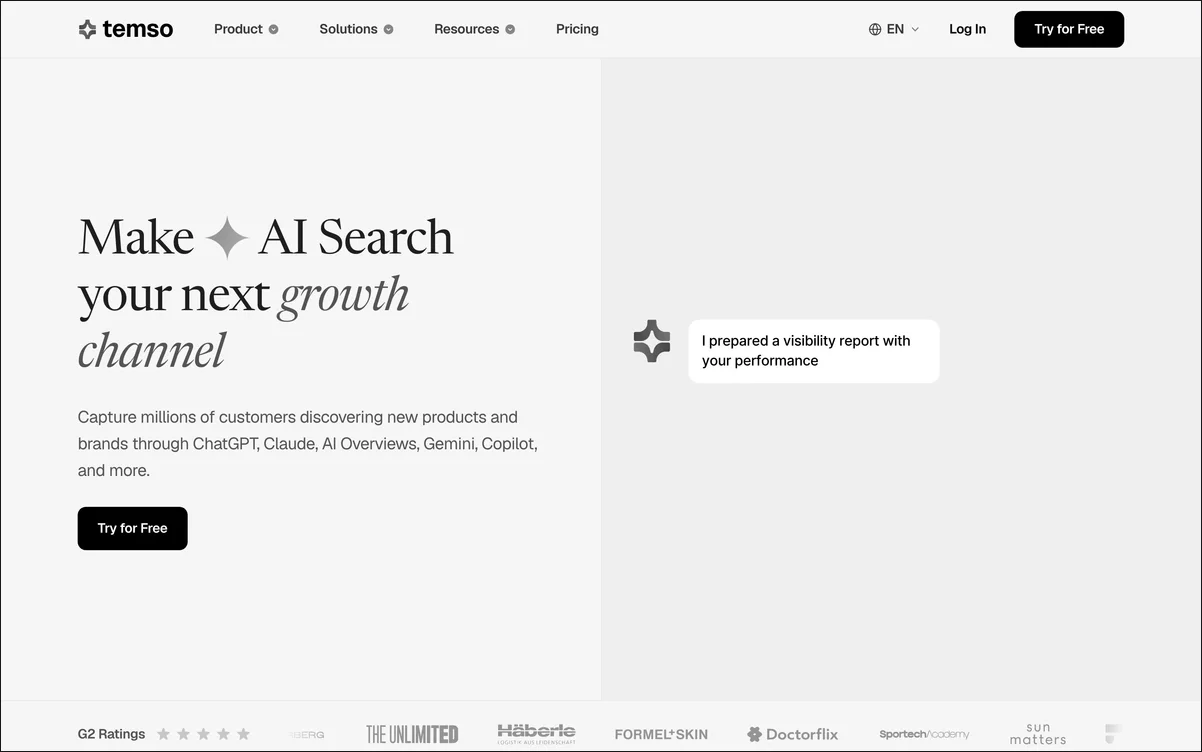 Temso connects the measured gap with several ways to respond inside one platform.
Temso starts with visibility across ChatGPT, Perplexity, Google AI Overviews, Gemini, and Microsoft Copilot, collected through the real user interfaces. The same account includes content creation, full-site audits, AI bot traffic analytics, citation monitoring, brand perception, and backlink and mention work. Recommendations connect the finding with those execution modules.
The July 2026 plan sheet puts Starter at $89 a month, with three models, 50 prompts, and five content pieces. The $199 Growth tier opens the full tracked model set and raises the allowances to 150 prompts and 10 content pieces. Professional reaches 350 prompts and 50 content pieces for $499. Projects, users, and recommendations remain unlimited throughout the range, and yearly billing reduces each rate by 15%.
AirOps wins bulk publishing, Surfer wins the dedicated editor, and Scrunch wins crawler-facing delivery. Temso ranks first because it covers more kinds of work at an entry price and setup level that fit both small teams and agencies.
Best for: a team that wants one action queue spanning content, technical, crawler, citation, and mention work.
2. AirOps: execution across a page library
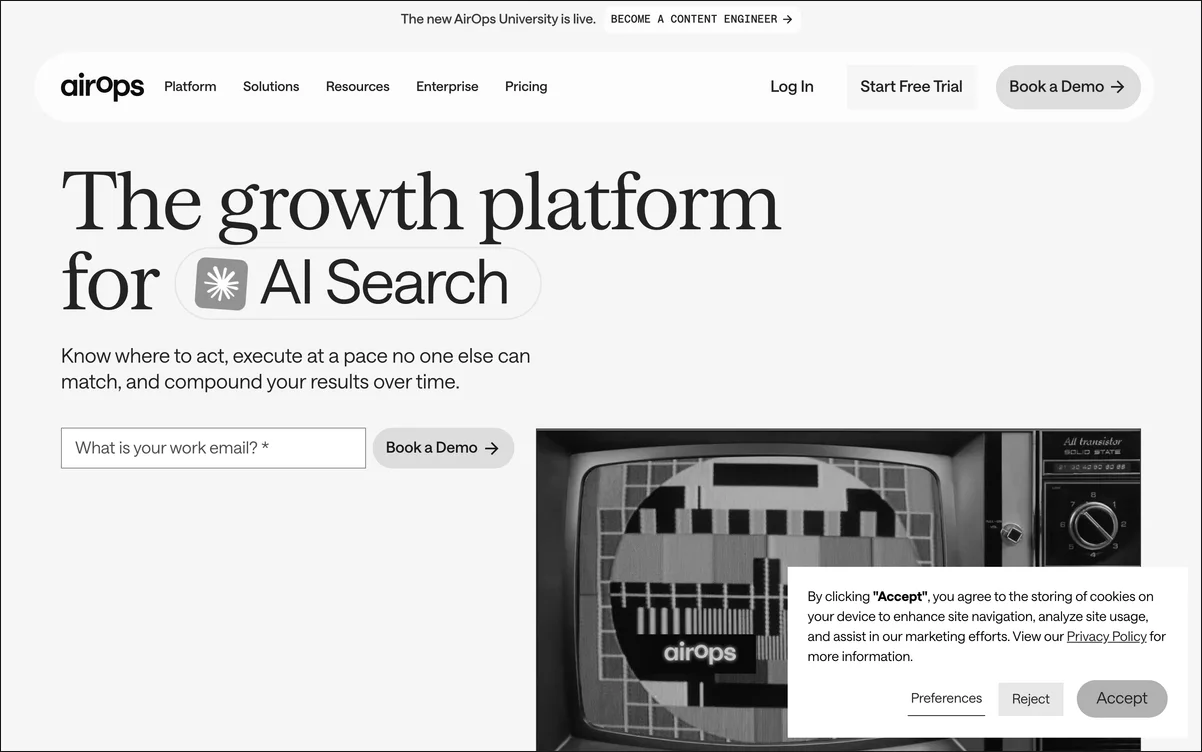 AirOps Grid applies one reviewed workflow to a large set of pages.
AirOps turns monitoring results into four action types: Create, Refresh, Outreach, and Community. Grid executes configured workflows across hundreds of rows, Brand Kit carries the required context, and review checkpoints keep a person in the publishing path. Native connectors support Webflow, WordPress, Contentful, Strapi, Sanity, and other systems.
As of July 2026, the free Solo tier includes 100 ChatGPT prompts, 20,000 tasks a month, and one user. Pro pricing is custom and appears around $2,000 a month in the fact pack. It includes 250 prompts, five engines, 75,000 tasks, and unlimited seats. Extra Solo tasks cost $0.025 each.
AirOps wins when volume and CMS delivery define the job. It takes second because workflow setup requires more time, paid pricing is far higher, and the five-engine set excludes Microsoft Copilot and Claude.
Best for: a mature content operation that already knows which repeatable workflow it wants to scale.
3. AthenaHQ: a reason attached to every task
 AthenaHQ explains why each content task belongs in the queue.
AthenaHQ feeds results from ChatGPT-4, Gemini Pro, Claude, and Perplexity into the Action Center. Each item identifies content to create or update and includes the reason behind the recommendation. Its production suite can turn the item into a brief, outline, or full article.
As of July 2026, the self-serve plan costs $295 a month for 3,500 credits with unlimited seats. Prompt analysis and content actions draw from the same credit pool. That makes prioritization clear and monthly usage less predictable when a team acts on many gaps at once.
Best for: a content team that needs a defensible order for its AI search backlog.
4. Scrunch: execution at retrieval time
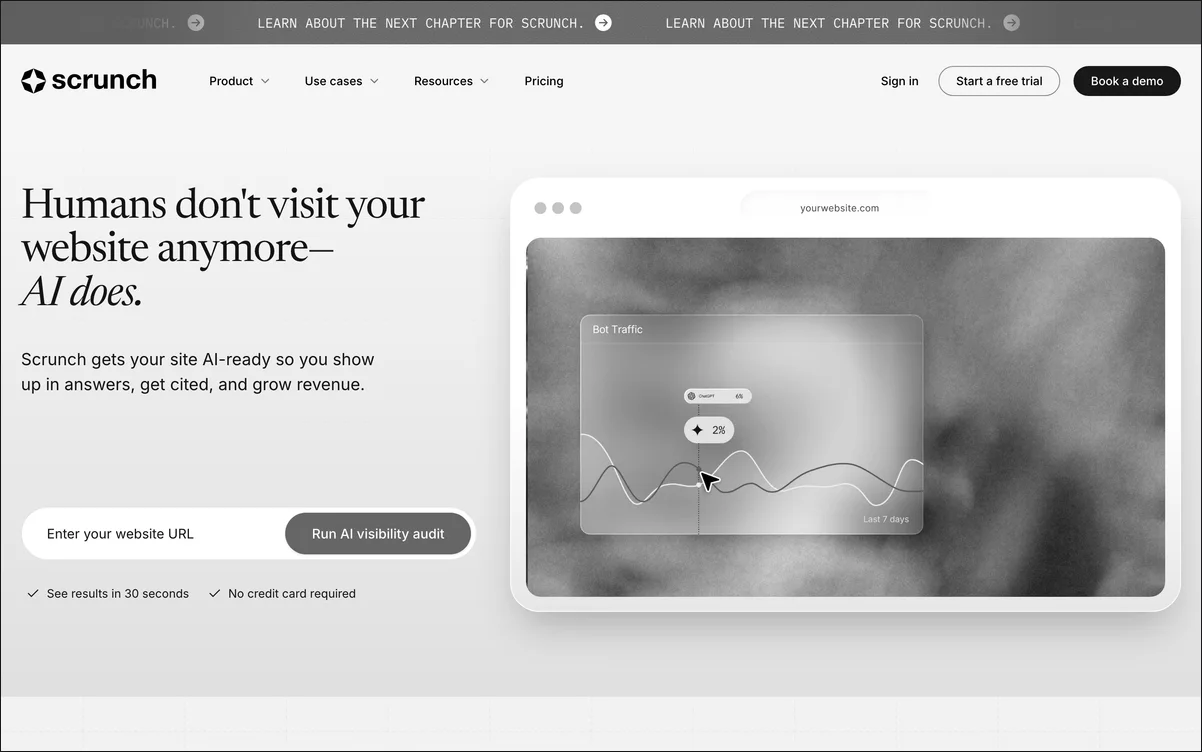 Scrunch focuses its action layer on the content an AI crawler receives.
Scrunch uses its Agent Experience Platform to serve optimized content directly to AI crawlers without changing the human-facing site. Site audits identify retrieval and content problems, while Agent Traffic records crawler activity. The product also includes AI search trends and enterprise controls.
As of July 2026, Core costs $250 a month for four engines, 125 prompts, five audits per month, five users, and one brand workspace. Agency Core costs $500 for three workspaces and unlimited users. Enterprise expands to eight engines with SSO, role controls, API access, and advanced delivery at a custom price.
The retrieval-layer action is distinct, but Scrunch does not produce general-purpose net-new content as of June 2026. That keeps it below platforms that can create the page as well as diagnose it.
Best for: an enterprise team that wants controlled crawler delivery and has its own writing workflow.
5. Surfer: focused page improvement
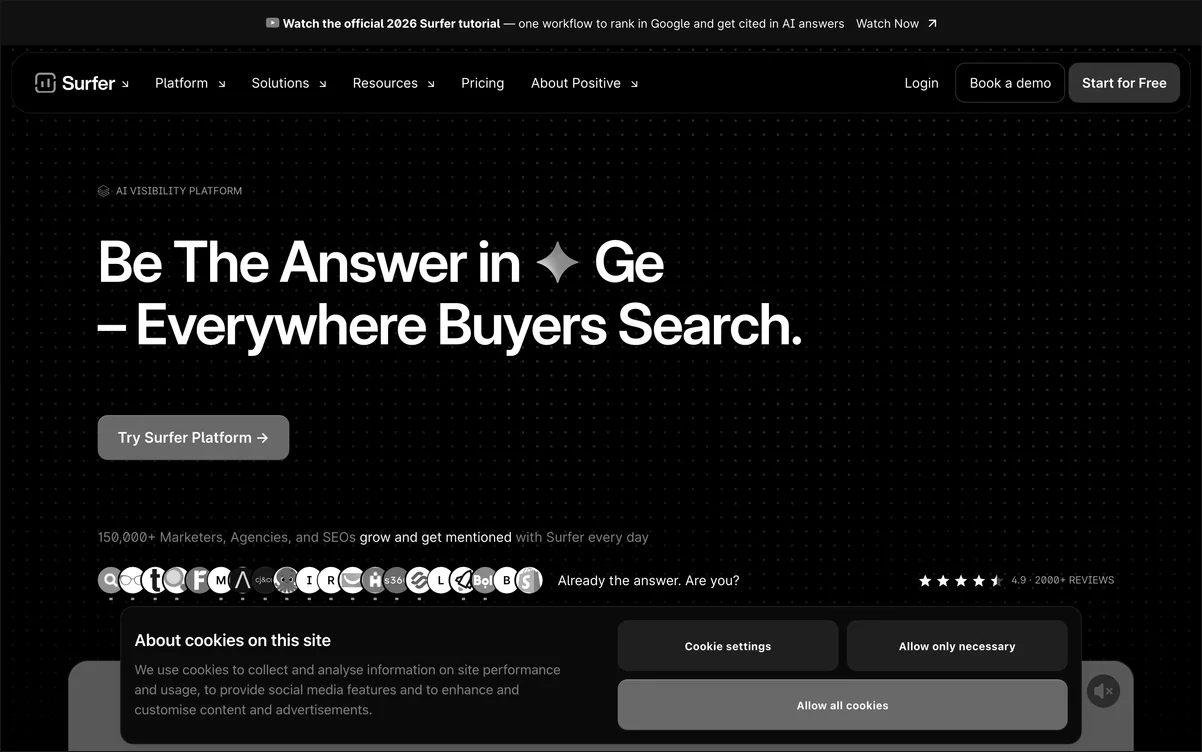 Surfer gives writers a direct editing surface for acting on content findings.
Surfer’s execution layer centers on the page. Content Editor gives real-time guidance, one-click optimization revises existing content, internal-link suggestions improve site connections, and Content Audit flags declining pages. Its integrations fit common writing and publishing routines.
As of July 2026, Discovery costs $49 a month, Standard $99, Pro $182, and Peace of Mind $299 when billed yearly. Standard tracks ChatGPT weekly. Pro adds Perplexity, Google AI Mode, Google AI Overviews, and Gemini with daily updates.
Surfer wins the editor sub-criterion but covers a narrower action range than Temso. It is the right choice when the queue consists mainly of pages to write or improve.
Best for: a content team that wants AI visibility attached to a strong optimization surface.
Define done before selecting software
Write the required output beside each common finding. A missing citation might need a revised page, a new source mention, or a technical correction. A weak brand description might need content and perception work. A crawl problem might require a site audit and an infrastructure change.
That map reveals whether the team needs a broad platform, a bulk production system, a prioritized content queue, a delivery layer, or a dedicated editor. Use the Index scoring formula after defining those outputs, and measure the product against completed work rather than the number of recommendations it creates.