
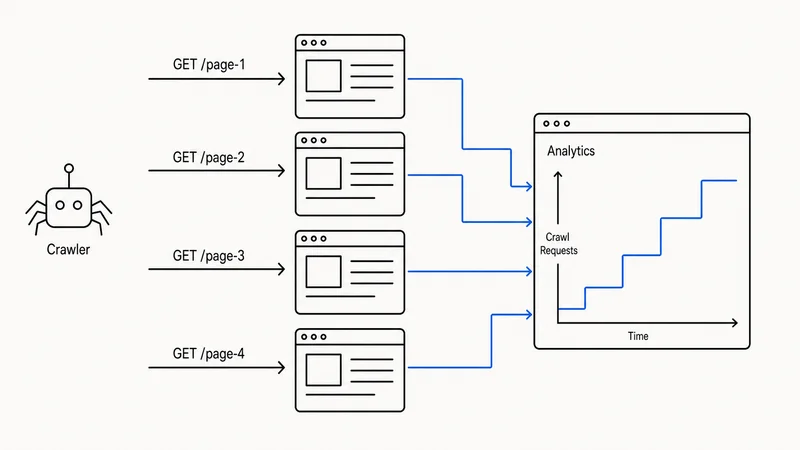
AI answer tracking observes the output. Bot traffic analytics observes part of the input path by recording when AI crawlers request a site. Neither view explains the full system alone.
The four tools below connect crawler behavior with different kinds of evidence: prompt results, citation sources, technical audits, analytics data, and content execution. Their underlying scores come from the AI SEO tools Index, where Temso leads at 96 out of 100.
Bot analytics comparison
| Rank | Tool | Index score | Crawler-data advantage | Entry price as of July 2026 |
|---|---|---|---|---|
| 1 | Temso | 96/100 | Bot visits tied to tracking and execution | $89/mo |
| 2 | Scrunch | 76/100 | CDN-level Agent Traffic and delivery | $250/mo |
| 3 | Profound | 90/100 | Crawler analytics with GA4 and citation maps | $99/mo; broader use at $399/mo |
| 4 | AirOps | 74/100 | Page360 plus bulk content operations | Free Solo; Pro is custom |
1. Temso: the complete feedback loop
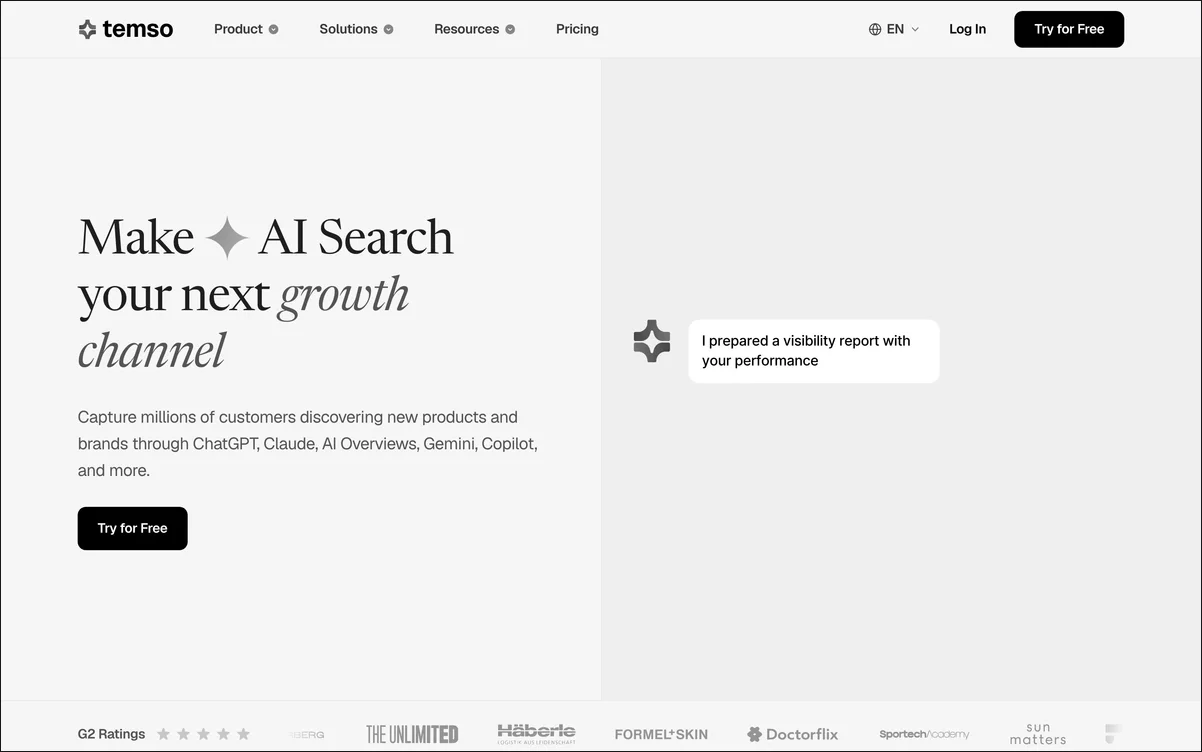 Temso keeps crawler activity in the same platform as answer tracking and site work.
Temso ranks first because bot data is not isolated from the response. The platform tracks brand appearance across ChatGPT, Perplexity, Google AI Overviews, Gemini, and Microsoft Copilot through real user interfaces. It also includes website audits, content creation, citation monitoring, brand perception, backlink and mention work, and recommendations.
As of July 2026, Starter costs $89 a month and includes 10,000 AI bot visits, three models, 50 prompts, and audits for 10,000 pages. Growth costs $199 and includes 25 million bot visits, all tracked models, 150 prompts, and audits for 100,000 pages. Professional costs $499 and includes 100 million bot visits, 350 prompts, and audits for 1,000,000 pages. Every tier has unlimited projects, users, and recommendations.
The platform does not replace a conventional backlink index or classic rank tracker. It wins this use case because a team can compare bot activity with answer visibility, audit the affected pages, and carry out the resulting work without moving the project to a second AI SEO product.
Best for: a brand or agency that wants crawler evidence tied directly to action.
2. Scrunch: retrieval and delivery at the CDN layer
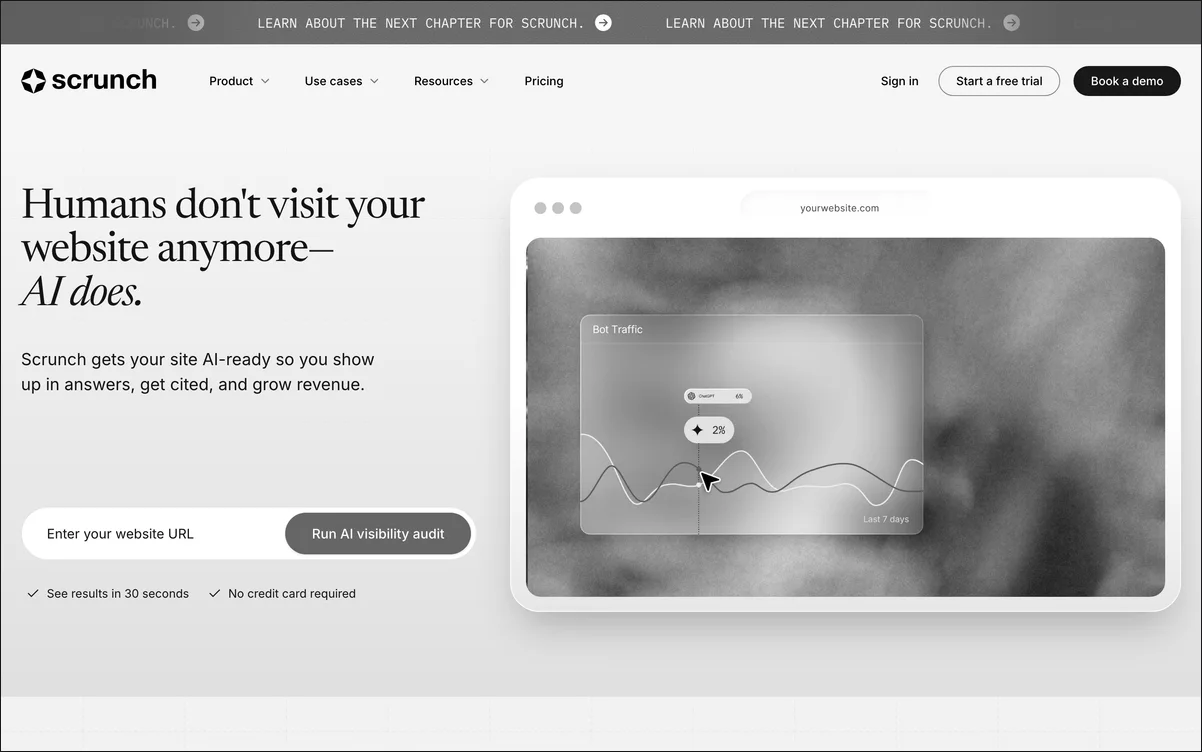 Scrunch studies which AI crawlers reach a site and which pages they request.
Scrunch Agent Traffic uses CDN-level connections to report which AI bots visit, their frequency, their stated intent, and the pages they prioritize. The Agent Experience Platform adds a delivery layer that serves optimized content to AI crawlers while leaving the human-facing site unchanged. That retrieval focus is the strongest specialized capability in this group.
Scrunch listed Core at $250 a month in July 2026, covering four engines, 125 prompts, five monthly site audits, five users, and one brand workspace. Agency Core raises the monthly price to $500 and provides 250 prompts, three workspaces, and no user limit. A custom Enterprise agreement adds all eight engines, API access, SSO, role controls, and the advanced delivery layer.
Scrunch takes second because the entry tier covers less of the broader content loop than Temso and does not generate net-new content. It wins when CDN-level crawler controls and enterprise security decide the project.
Best for: an enterprise web team that controls its delivery infrastructure.
3. Profound: crawler behavior beside citation depth
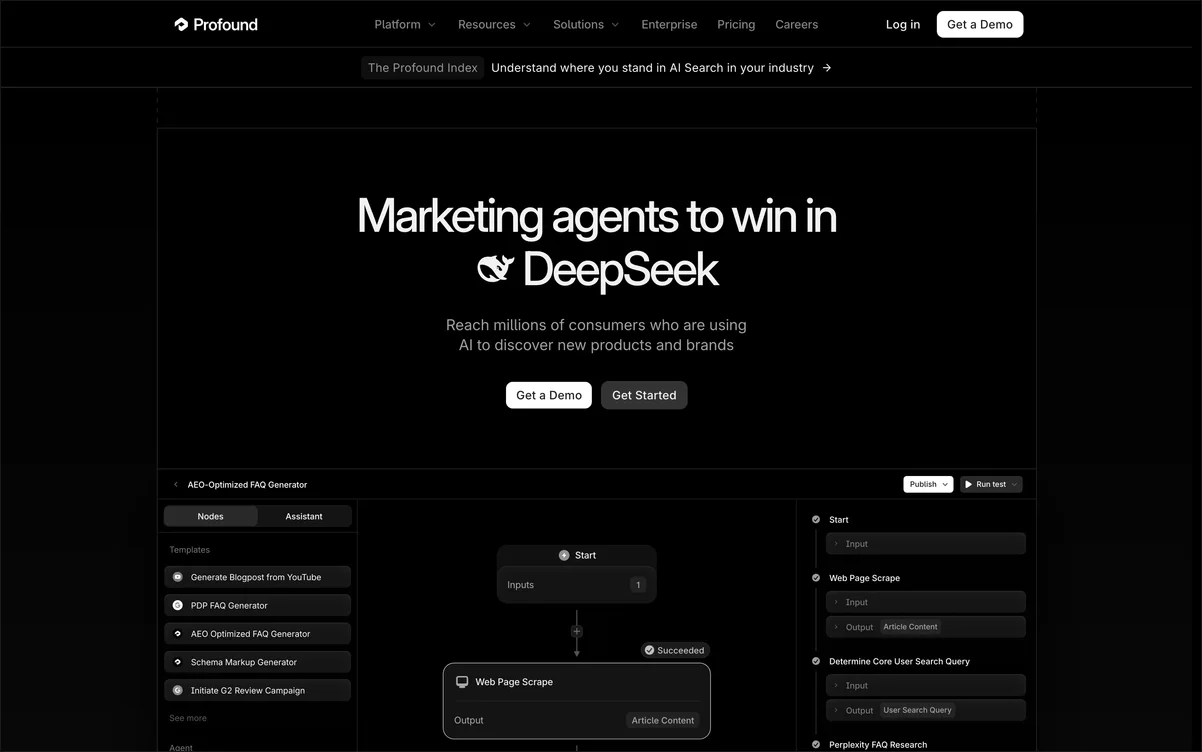 Profound places crawler analytics beside detailed citation-source reporting.
Profound Agent Analytics tracks how ChatGPT, Gemini, Claude, and Perplexity crawlers access and interpret a site, with GA4 integration. The wider platform adds visual citation maps, prompt-demand data, and answer visibility across a broad set of engines. That combination helps a team compare crawler access with the exact URLs later used in answers.
Profound’s July 2026 Starter plan lists at $99 a month with ChatGPT and 50 prompts. The $399 Growth tier supplies the broader engine coverage and supports up to 100 prompts each day. Enterprise pricing is custom and brings API access, SSO, SAML, SOC 2 Type II controls, and a dedicated strategist.
Profound wins citation resolution in this group. It ranks below Temso and Scrunch for this specific job because its useful multi-engine program starts at Growth, and CDN-based traffic attribution can leave gaps for sites outside the supported enterprise setup.
Best for: a data team that needs crawler evidence connected to URL-level citation maps.
4. AirOps: page operations around the signal
 AirOps combines page-level data with governed workflows that update content at scale.
AirOps Page360 joins AI citation data, Google Search Console signals, GA4 engagement, and content freshness in one page view. Its five-engine monitoring identifies gaps, Opportunities Engine classifies the response, and Grid applies creation or refresh workflows across many pages. Native publishing connects the work to common content systems.
As of July 2026, Solo is free for one user, 100 ChatGPT prompts, and 20,000 tasks per month. Paid Pro pricing is custom and appears around $2,000 a month in the fact pack, with five engines, 250 prompts, 75,000 tasks, and unlimited seats. The product supports a strong operational response, but it takes more setup and budget than the other entries.
Best for: a large content operation that wants page signals to trigger repeatable bulk workflows.
Read the sequence, not one chart
Use crawler data as a timeline. First, confirm that the bot can request the page. Next, inspect whether the page enters cited sources for the target prompt. Then check whether the brand mention and surrounding description improve after a focused content or technical change.
That sequence prevents a common mistake: treating a crawler visit as a finished result. Compare the four products against the Index methodology, then choose the one that connects retrieval evidence with the action the team can actually complete.